 Community Sports Club BulletinLeisure and Cultural Services Department

Sports Recommendation
Page 6-7
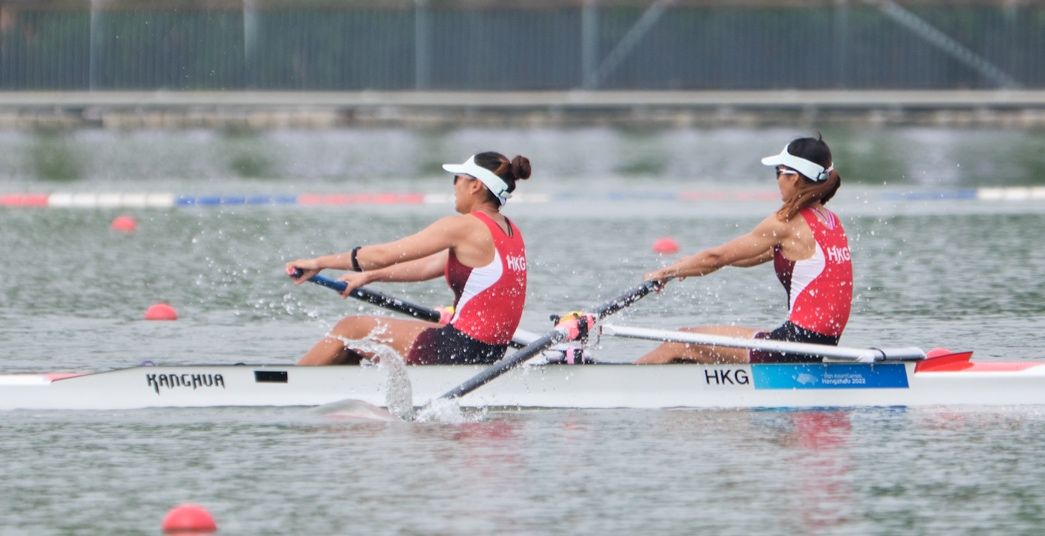
Rowing
Rowing, once a pastime of Western nobility, is a competitive water sport that requires rhythm, techniques and teamwork. As early as in the 19th century, the Oxford and Cambridge universities in the United Kingdom were staging intercollegiate competitions. Since 1900, rowing has officially become an Olympic event. Today, this once-aristocratic sport has become a popular recreational activity for all ages.
What are the different types of rowing?
Rowing is a sport in which athletes propel the boat across water surface using the oar for leverage. While many assume that rowing can only take place on a river, the sport has diversified and is suitable for enthusiasts of all ages and backgrounds. The major disciplines are as follows –
- Classic Rowing (Flat Water Rowing)
Taking place on flat water and featuring streamlined boats, classic rowing is a game of speed and coordination. As a standard event in the Olympics and international competitions, it is divided into various races based on sex, team size, inclusion of a coxswain and boat type.
Men and Women’s
These include single sculls, double sculls, quadruple sculls, as well as coxless pair, coxed four, coxless four and coxed eight.
- Board Rowing
Comprising a rigging frame and a board, the boat is relatively steady and easy to manoeuvre, making it the ideal option for beginners, youths and the elderly to get started.
- Coastal Rowing
Rising in popularity in recent years, coastal rowing is suitable for staging on beaches and in coastal areas. It will make its Olympic debut at Los Angeles in 2028 featuring men’s single sculls, women’s single sculls and mixed double sculls.
- Indoor Rowing
Using indoor rowing machines to learn the right moves, indoor rowing is unfazed by weather conditions and suitable for popularisation in schools and fitness centres.
Competition Rules and Venue Requirements
Classic rowing takes place on calm water using long and narrow boats with tapered ends, commonly known as “shells”. Rowers sit in the boat facing backward and row in unison to propel forward. The racecourse should include a starting zone and a buffer zone. At present, classic rowing regattas are conducted on straight waterways, featuring a standard distance of 2,000 metres, with each lane measuring 13.5 metres in width.
Techniques and Teamwork are Key
Rowing demands more than physical strength – it is also a challenge of skills and strategies. Every stroke must be smooth and precise. Teamwork is the key to success; only when the whole team row in sync can the boat propel forward at full speed.
In the Coxed Eight event, the coxswain is undoubtedly the linchpin of the team, steering the boat, observing the opponents’ strategies and giving tactical instructions. The final sprint to the finish line is especially a true test of the team’s endurance and mental fortitude.
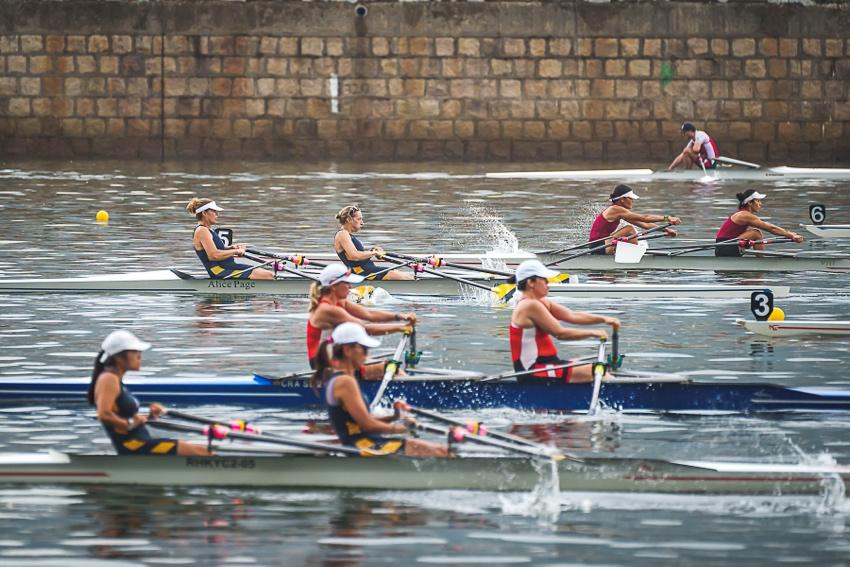
Rowing Jargons
Drive | Pulling the oar backwards by pushing with legs and engaging the back to propel the boat forward. |
Recovery | Returning to the ready position and prepare for the next stroke. |
HoldWater | Squaring the blades to halt the boat. |
Square | Positioning the blade perpendicular to the water surface to maximise propulsion. |
Feather | Turning the oar so that the blade is parallel to the water surface to minimise resistance. |
Bow/StrokeSide | Instead of using left or right, rowers refer to the stroke side (left) and bow side (right). In sweep rowing, bow side rowers use an oar extending to the left while stroke side rowers use an oar extending to the right. |
Development of Rowing in Hong Kong
Rowing was introduced to Hong Kong by British athletes in the 19th century, with the Royal Hong Kong Yacht Club at the helm in the early days. In 1978, the Hong Kong, China Rowing Association (HKCRA) was officially established, and has since then taken on the dual mission of promoting rowing and grooming elite athletes.
In recent years, the Hong Kong rowing team has achieved remarkable success on the international stage, demonstrating the talent of local athletes –
|
|

A Sport for All
The HKCRA currently operates two major rowing facilities, namely the Jockey Club Sha Tin Rowing Centre and the Jockey Club Shek Mun Rowing Centre. Both fully equipped with boathouses, training rooms and gyms. To encourage public participation, the HKCRA organises the “Galaxy Course”, which ranges from 1-star to 5-star and covers everything from the basic techniques to advanced skills. The course is open to individuals and groups. The HKCRA also offers educational entertainment activities, such as the coastal rowing seafood tour, where members can enjoy the scenery and delicacies while rowing along the coast. Furthermore, the HKCRA collaborates with the LCSD, its affiliated clubs, schools and other centres to promote rowing through various activities such as the “Youth Rowing Development Programme”, “Indoor Rowing for Schools”, para rowing events and coastal rowing experience activities, with the aim of bringing the sport to the wider community through school tours and community outreach. Every year, Hong Kong stages a number of major rowing events, including the Hong Kong Rowing Indoor Championships in March, the Hong Kong Rowing International Masters Regatta in April, and the Hong Kong Rowing Championships in November, attracting athletes from around the globe to compete in the city. Come and join us in the stands, immerse yourself in the thrill of the races, and cheer on Hong Kong rowing athletes! |
|
