 Community Sports Club BulletinLeisure and Cultural Services Department

Featured Report
Page 3
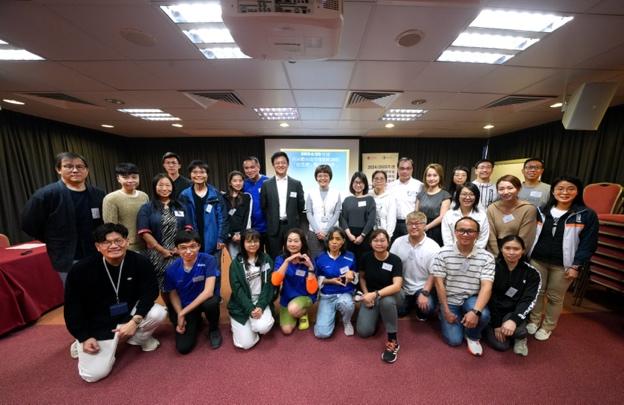
Graduation Ceremony cum Sharing Session of the 2024/25 Community Sports Club Management Development Programme Advanced Course
The 2024/25 Community Sports Club Management Development Programme Advanced Course, co-organised by the LCSD and the Research Centre for Physical Recreation and Wellness (CPRW), concluded with a graduation ceremony at the LCSD headquarters on 2 March 2025. In addition to awarding graduation certificates, the event featured a sharing session led by Dr. Bjorn Tam Tsz-king, Associate Director of the CPRW, who shared valuable insights on the importance of health management with community sports practitioners. |
|
Bridging Theory and Practice: Advanced Training for Professional Development of Community Sports
To further professionalise and popularise the sports industry in Hong Kong and equip community sports club volunteers with management skills, the LCSD and the CPRW joined hands again in organising the Community Sports Club Management Development Programme Advanced Course. The course covers topics such as “Event Planning and Design”, “Internship Induction”, “Risk Management and Measures”, “Service Positioning and Effectiveness Control”, and “Club Personnel Management Strategies”. Beyond theoretical learning, participants gained hands-on experience during their internships by planning and organising events under instructor guidance, building foundations for self-directed management in community sports clubs.
Health Management Sharing Session: Understanding Sarcopenic Obesity
A highlight of the ceremony was Dr. Tam’s sharing session on “Preventing Sarcopenic Obesity through Community Sports”. He highlighted society’s excessive emphasis on BMI (Body Mass Index) while neglecting muscle mass, noting BMI can’t distinguish between fat and muscle and serves merely as a reference. True health assessment requires the evaluation of muscle mass, strength, and functional performance.
Dr. Tam cited research showing that after age 30, people lose about 1% of muscle mass yearly, a decline that accelerates without exercise, weakening mobility and increasing risks of falls and chronic diseases. This is not just an issue for elderly people; younger individuals who neglect muscle strength training are also vulnerable.
Physical Activities Over Workouts: Fitness Gyms in Daily Life
To preserve muscle mass, Dr. Tam encouraged integrating physical activities into daily routines rather than relying solely on multiple weekly gym visits. Simple but effective physical activities include commuting on foot, carrying groceries, children and heavy items. If high-intensity training is not preferred, doing simple exercises, such as squats, push-ups and knee-lift stepping, in a consistent manner can also help maintain muscle mass. For older adults, lower-body strength is especially crucial. To yield long-term benefits, these workouts or physical activities should be easily sustainable and hence become a regular part of daily life. Dr. Tam also reminded participants to listen to their bodies and stop exercising when they feel unwell.
The Hidden Crisis: Visceral Fat as the Ultimate Threat
According to Dr. Tam, obesity is not just about overweight—fat distribution matters. While hip and thigh fat pose fewer health risks, visceral fat around our organs brings about central obesity and proves far more harmful to our health. Asians with BMI between 23 and 24.9 are overweight. Those with BMI 25 or above are obese. Having a waist circumferences over 90 cm for men or over 80 cm for women signals central obesity, which is a health concern. Central obesity significantly increases the risk of many major illnesses such as diabetes, cardiovascular diseases and cancers and must never be taken lightly.
Through the Community Sports Club Management Development Programme Advanced Course, graduates have strengthened both their theoretical knowledge and practical skills in sports programme planning and management. They are now better prepared to fulfil their roles in promoting community sports and working collaboratively to build heathier, more vibrant communities.
Self-Screening Questionnaire for Sarcopenia
To help people spot early warning signs, Dr. Tam shared a sarcopenia screening questionnaire:
- Strength How much difficulty do you have in lifting 10 lbs?
- Walking How much difficulty do you have walking across a room?
- Rising How much difficulty do you have getting up from a chair or the bed?
- Stairs How much difficulty do you have climbing a flight of 10 stairs?
- Falls How many times have you fallen in the past year? *
Scoring for Each Question:
None = 0 pt. | Some = 1 pt. | A lot or unable = 2 pt. | * None = 0 pt. |
less than 3 falls = 1 pt. 4 or more falls = 2 pt. A total score of 4 or above indicates possible sarcopenia | |||
Three Simple Self-Tests
Dr. Tam shared three additional simple but practical self-tests for sarcopenia:
Grip Strength Test | Men: ≥ 28 kg | Women: ≥ 18 kg |
Below the above threshold: Insufficient muscle strength. Muscle training recommended. | ||
Calf Circumference | Men: ≥ 34 cm | Women: ≥ 33 cm |
Below the above threshold: Potential muscle loss | ||
Sit to Stand Test | Complete 5 sit-to-stand movements within 12 seconds |
Failure to do so: Possible sarcopenia. Further checkup recommended. | |
Dr. Tam recommended anyone with concerns regarding the test results should consult a healthcare professional for further assessment and advice.
Upcoming Activities
2025/26 Community Sports Club Management Development Programme
Advanced Course | Foundation Course II |
Programme Period: September 2025 | Programme Period: January 2026 |
Enrolment Period: August 2025 | Enrolment Period: December 2025 |
For more information, please contact the Community Sports Club Unit of LCSD on 2601 8904.