(IV) Education and Promotion on Environmental Protection
| (a) | Horticulture Courses for the General Public | | 3.8 | In 2024, we conducted 63 horticulture courses for 1 839 participants. |
| (b) | Guided Visits for Schools and Non-governmental Organisations (NGOs) | | 3.9 | A total of 877 guided visits for 23 913 participants from schools and NGOs were organised in 2024, which included 703 school guided visits for 19 667 school children at the Hong Kong Zoological & Botanical Gardens, Green Education and Resource Centre, Kowloon Park, Hong Kong Park, Tai Po Waterfront Park, Tuen Mun Park and Boundary Street Nursery. The guided visits were designed having regard to the curriculum on environmental education for primary schools. A total of 154 visits were also arranged for 3 889 children from kindergartens to tour around the Kowloon Park and Hong Kong Park. Children were introduced the basic knowledge and concept of plants, environmental conservation and the appropriate manners for visiting parks. Besides, free guided visits were arranged for 357 participants from 20 NGOs to tour around the Green Education and Resource Centre at the Kowloon Park. 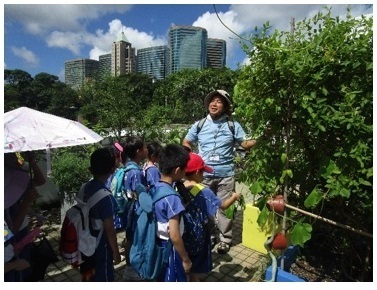
|
| (c) | Conservation Courses for Uniformed Groups | | 3.10 | The programmes provided a wide range of courses in gardening and arboriculture and aimed at promoting nature conservation. A total of 15 conservation courses were organised for some 243 participants of the uniformed groups in 2024. Participants were involved in group discussions, lectures and guided visits. 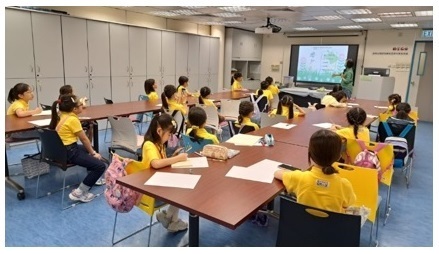
|
| (d) | Programmes and Exhibitions on Environmental Protection | | 3.11 | To arouse public awareness of environmental issues, the Hong Kong Science Museum and Hong Kong Space Museum launched exhibitions and organised various programmes, including –
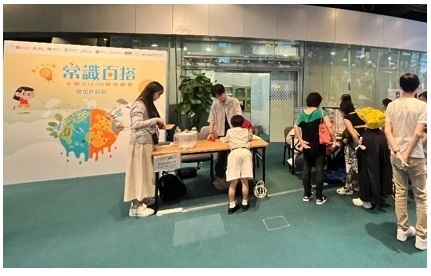
- the science competition “Primary Science Projects Exhibition” conducted in collaboration with the Education University of Hong Kong, Education Bureau, and other partners under the theme “Climate Change”. Students investigated the links between natural disasters and climate change, developing innovative solutions based on their findings. Winning teams showcased their proposals at the Hong Kong Science Museum, attracting visitors’ attention and raising awareness about this pressing issue;
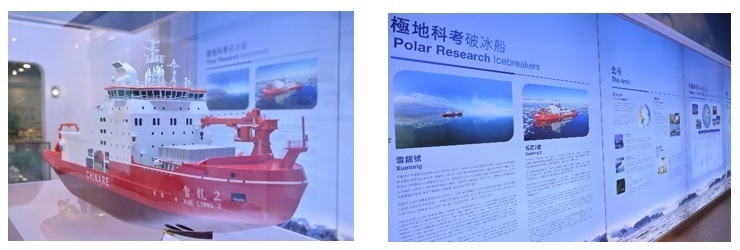
- the special exhibition “Polar Research and Climate Change Exhibition” held from March to June 2024. It highlighted the ecology and natural environment of the polar regions, showcased China’s polar research facilities, and examined the efforts of the Chinese Mainland and Hong Kong in combating climate change;
- public lectures on environmental protection, green technology, sustainable development and climate change organised at the “Science in the Public Service” Forum and Lecture Series from August to December 2024;
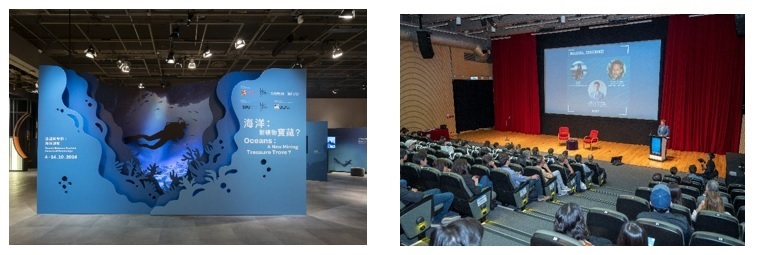
- the French Science Festival held in collaboration with the Consulate General of France in Hong Kong and Macao in October 2024. Under the theme “Oceans of Knowledge”, a special exhibition titled “Oceans: A New Mining Treasure Trove?” was conducted, alongside an inaugural conference on the preservation of oceans and marine resources. The exhibition examined key issues surrounding the preservation of marine resources and biodiversity;
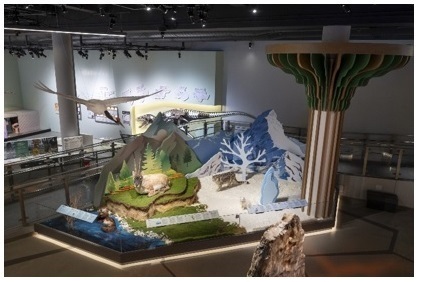
- a new exhibit, “Conserving for the Future”, launched at the Palaeontology Gallery of the Hong Kong Science Museum. The exhibit highlighted successful conservation stories of five endangered species and inspired proactive efforts to prevent human-induced extinctions;
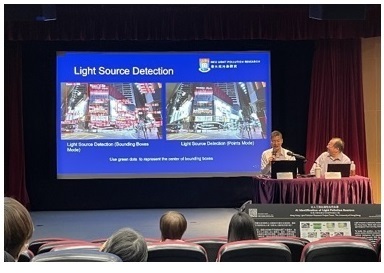
- the research project “Hong Kong Night Sky Brightness Monitoring Network” on light pollution conducted by the Hong Kong Space Museum in collaboration with the Department of Physics of the University of Hong Kong (HKU) between September 2010 and July 2017. Funded by the Environment and Conservation Fund initially, the project aimed at carrying out a comprehensive monitoring of the condition of light pollution in Hong Kong by studying the night sky brightness at about 18 urban and rural locations, including the Hong Kong Space Museum, iObservatory and Astropark. The Hong Kong Space Museum has continued to collaborate with the Department of Physics of HKU via the research project “Globe at Night – Sky Brightness Monitoring Network”, which is the overseas extension of the previous cooperation between the Museum and HKU since July 2017. In addition, the Hong Kong Space Museum transmitted the message of reducing light pollution during various activities, including the School Culture Day, public lectures and observation programmes;
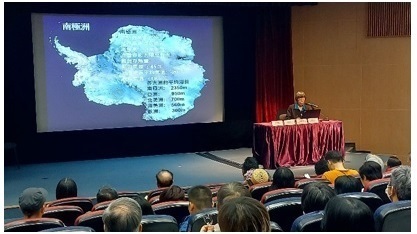
- collaborating with the Jockey Club Museum of Climate Change and the Hong Kong Regional Group of Geological Society of London to co-organise the “Polar Expedition and Climate Change” lecture in September 2024 and “Climate Change and Antarctica” Lecture Series in December 2024.
|
(V) Greening Activities| 3.12 | The Department continuously promotes a green culture in the community through a series of educational and community involvement programmes. A total of 3 225 greening activities were organised in 2024, as outlined below. | | (a) | Hong Kong Flower Show | | 3.13 | The Hong Kong Flower Show 2024 was held from 15 to 24 March 2024 at Victoria Park with the theme “Floral Joy Around Town”. It featured the colourful Angelonia as the theme flower, attracting over 650 000 visitors. The event showcased a rich profusion of exquisite potted plants, beautiful floral arrangements and gorgeous landscape displays that featured both Chinese and Western elements, drawing support from more than 229 organisations, which included 81 exhibitors from 12 countries. To enhance public knowledge of and interest in horticulture and to promote a green lifestyle, a wide range of educational and recreational activities were organised for visitors, such as students drawing competition, photo competition, plant exhibition competition, floral art demonstrations, horticultural seminars, workshops on greening activities, guided visits, parent-child fun games, etc. In addition, a two-day “Green Recycling Day” was held upon the conclusion of the show, reflecting our commitment to implementing green measures for environmental protection. More than 300 volunteers assisted in collecting reusable and recyclable materials at the showground. To encourage greening in the community, flowers suitable for replanting and landscape displays that could be reused were relocated to our parks and amenity areas, while some 10 000 potted plants suitable for replanting were given away to schools, environmental groups and NGOs. Around 3 000 pots of Angelonia were distributed to members of the public. 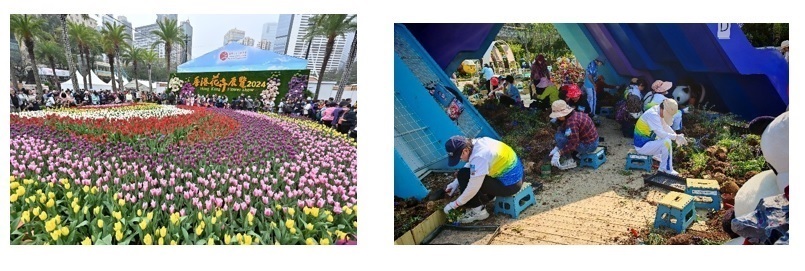
|
| (b) | Community Planting Day | | 3.14 | To promote public awareness of greening, we organised 19 Community Planting Days in 2024. More than 4 000 participants planted over 19 700 trees and shrubs in various districts. 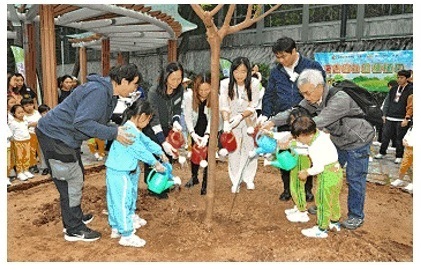
|
| (c) | Green Volunteer Scheme | | 3.15 | Green Volunteers were recruited in 18 districts to serve as stewards in greening promotion activities, and to assist in tree surveillance work and reporting problematic trees. They were encouraged to participate in greening their neighbourhood. In 2024, 360 greening activities were organised for Green Volunteers with an attendance of about 6 076. 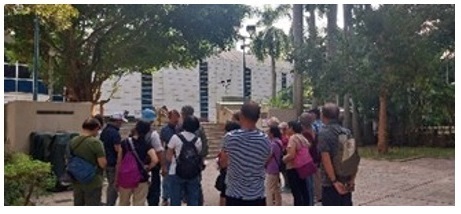
|
| (d) | Greening School Subsidy Scheme | | 3.16 | In 2024, the Greening School Subsidy Scheme attracted the participation of 892 schools and kindergartens in organising greening activities and implementing planting projects in their campuses under the technical advice from horticultural instructors. 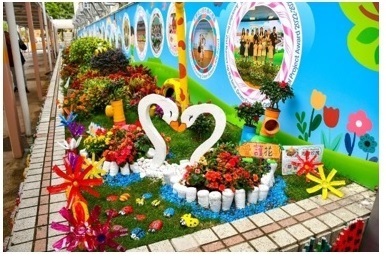
|
| (e) | “One Person, One Flower” Scheme | | 3.17 | The “One Person, One Flower” Scheme aimed at enhancing the knowledge of students about plants and developing their interests in growing plants. In 2024, about 370 000 seedlings were distributed to students for nurturing at home or in schools. 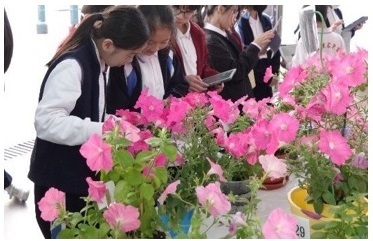
|
| (f) | Greening Hong Kong Activities Subsidy Scheme | | 3.18 | The Greening Hong Kong Activities Subsidy Scheme aimed at encouraging the local community to organise more greening activities. In 2024, five organisations were subsidised under the Scheme to conduct floral exhibitions and horticultural workshops. 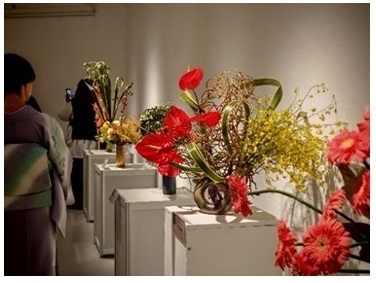
|
| (g) | Greening Exhibitions and Talks | | 3.19 | Greening exhibitions and talks on horticulture were organised at the Hong Kong Zoological and Botanical Gardens as well as the Green Education and Resource Centre at the Kowloon Park in 2024 with a view to enhancing public awareness of greening. A total of 386 exhibitions and talks were organised with some 25 000 participants. 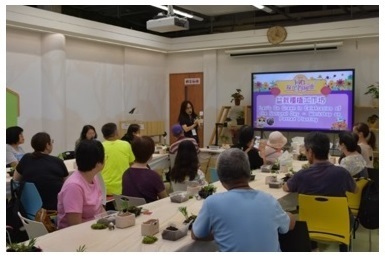
|
| (h) | Community Garden Programme | | 3.20 | To encourage the public to participate actively in greening activities in their neighbourhood and to practise greening as part of daily life, 70 gardening courses were organised in 2024 with about 12 500 participants. 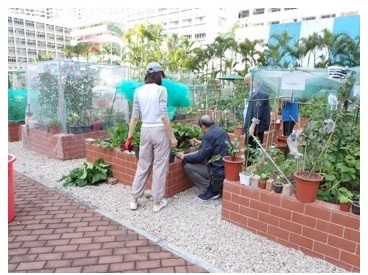
|
| (i) | Outreaching Greening Promotional Activities | | 3.21 | To promote greening and enhance public awareness of environmental protection, a total of 89 outreaching greening promotional activities, including roving exhibitions at leisure venues in 18 districts as well as outreaching greening activities for organisations and schools, were arranged for about 36 900 participants in 2024. 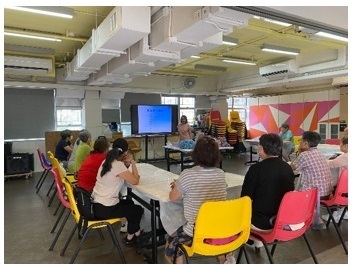
|
(B) Preserving Cultural Heritage| 3.22 | The Department, through the Conservation Office (CO), is committed to preserving Hong Kong’s cultural heritage. The CO provides conservation support for thematic exhibitions and preservation care and treatment for all collections pertaining to the public museums, Hong Kong Film Archive, Art Promotion Office, Intangible Cultural Heritage Office and Chinese Culture Promotion Office. | | 3.23 | The CO devises, implements and evaluates conservation programmes for museum artefacts and heritage objects. Over the year, there were 150 objects and collections with various degree of deterioration treated and preserved by the CO’s professional conservators. | | 3.24 | Besides, the CO conducts technical examination and scientific studies on cultural heritage to support conservation work. In 2024, the CO conducted an exercise to evaluate potential energy-saving measures in museum premises with venue managers in order to look for ways to conserve energy whilst maintaining the preservation condition of storage rooms and exhibition galleries for safeguarding museum collections. The findings and data collected during the year provided valuable information to develop effective energy-saving measures and models for application in museums to proactively operate towards sustainability in the future. 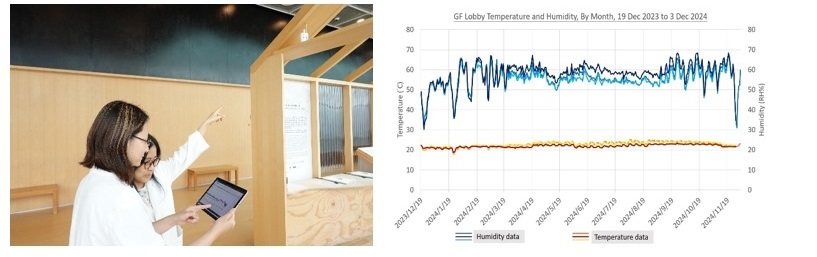
| | 3.25 | The CO is dedicated to raising the awareness of and support for conservation at all levels of the community by organising educational programmes and extension activities. In 2024, the CO supported and organised a variety of education programmes and activities for students and members of the public, such as the School Culture Day Scheme, Muse Fest HK 2024, Tung Wah Group of Hospitals’ (TWGHs) Student Conservation Ambassador Programme in collaboration with the TWGHs Records and Heritage Office as well as a conservation public programme and lecture in Shenzhen and Hong Kong with the Shenzhen Museum. 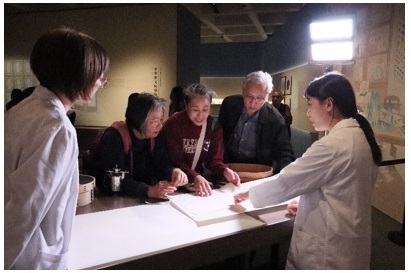
| | 3.26 | We firmly believe that cultural heritage does not only provide an essential and irreplaceable link between the past, the present and the future, but is also fundamental to the sustainable development of our community as it forms the basic point of reference for our cultural identity, traditions and collective memory. | | 3.27 | To ensure the continuous preservation and well-being of cultural heritage, conservation and community’s active participation are indispensable. |
(C) Fostering Net-zero Electricity Generation| 3.28 | We progressively adopt renewable energy technologies for electricity consumption with a view to enhancing the energy‑saving performance. The application of various renewable energy technologies in our venues are as follows –
- using photovoltaic lighting systems in our venues, including the Hong Kong Science Museum, Ko Shan Theatre New Wing, Tiu Keng Leng Public Library, Kwai Tsing Theatre, Tsuen Wan Town Hall, Tuen Mun Town Hall and Ngau Chi Wan Civic Centre, to promote the energy-saving concept by converting solar energy directly into electricity;
- installing solar energy lights at different venues, including Hong Kong Park, Quarry Bay Park, Chai Wan Park, Waterfall Bay Park, Victoria Park, Kowloon Park, Fa Hui Park, Kai Tak Runway Park, Jordan Valley Park, Morse Park, Po Kong Village Road Park, Tung Chung North Park, Cheung Chau Park, Tsing Yi Northeast Park, Tsuen Wan Park, Sha Tin Park, Tai Po Waterfront Park, Po Tsui Park, North District Park, Tuen Mun Riverside Park, Wu Shan Riverside Park, Tin Shui Wai Park, Nam Cheong Park, Kai Tak Avenue Park, Sai Kung Waterfront Park, Cherry Street Park, Yuen Shin Park, On Luk Street Park, Po Hong Park, Po Wing Road Sports Centre, Sha Tau Kok Promenade Sitting-out Area, Sha Tau Kok Children’s Playground, Fanling Hong Lok Park, Sha Tau Kok Recreation Ground, Shek Wu Hui Jockey Club Playground, Tin Sau Road Park, Tin Yip Road Park, Tin Shui Wai Cycling Entry Exit Hub, Jockey Club Tak Wah Park, Kwok Shui Road Park, Shing Mun Valley Park, Ngau Chi Wan Park, Tuen Mun Park and Pak Fuk Children’s Playground, to promote the adoption of renewable energy technologies; and
- installing photovoltaic panels at different venues, including Tsim Sha Tsui Promenade, Kai Tak Station Square, Hong Ning Road Park, Kwun Tong Promenade, Yat Ming Road Park, Po Kong Village Road Park, Lion Rock Park, Kai Tak Avenue Park, Wan Chai Sports Ground and Chai Wan Swimming Pool, to promote the energy-saving concept by converting solar energy directly into electricity.
|
(D) Enhancing Energy Saving and Incorporating Green Building Features| 3.29 | The Government has set a new “Green Energy Target” which aims to achieve a further reduction of 6% in the Government’s total energy consumption for the period between 2020-21 and 2024-25, using comparable operating conditions in 2018-19 as the baseline. We will play an active role to achieve the goal and strive to integrate green features in our buildings/venues and adopt green practices as far as practicable. |
(I) Change in Energy Consumption | | 3.30 | The energy consumption of government buildings/venues under the Department in 2018-19 and 2024-25 is tabulated below –
| Energy consumption
(million kWh) | Energy consumption under comparable operating conditions
(million kWh) | | 2018-19 (baseline) | 490.0 | Not applicable | | 2024-25 | 487.7 (-0.5%) | 446.4 (-9.0%) |
| | 3.31 | The total energy consumption of government buildings/venues under the Department decreased by 0.5% in 2024-25 as compared to 2018-19. Under the comparable operating conditions in 2018-19, there was a decrease of 9.0% in energy consumption in 2024-25. We will continue to implement various practicable housekeeping measures and best practices for energy saving. | | 3.32 | The change in energy consumption has factored in significant changes in opening/closure of venues/facilities, addition/reduction of services, addition/removal of plants/equipment, extended/shortened service hours, increased/decreased demand for services, change of chairmanship of Building Management Committee1, etc. for a like-with-like comparison. |
1 The energy consumption of a Municipal Services Building is counted towards the Department holding the Building Management Committee chairmanship. (II) Green Buildings |
 Environmental Report 2024Leisure and Cultural Services Department