
|
21
Tue
Oct
2025
19:30
|
25
Tue
Nov
2025
19:30 |

|
$80 |

|
AC2, 4/F, Administration Building, Hong Kong Cultural Centre |
 BUY TICKET
Music
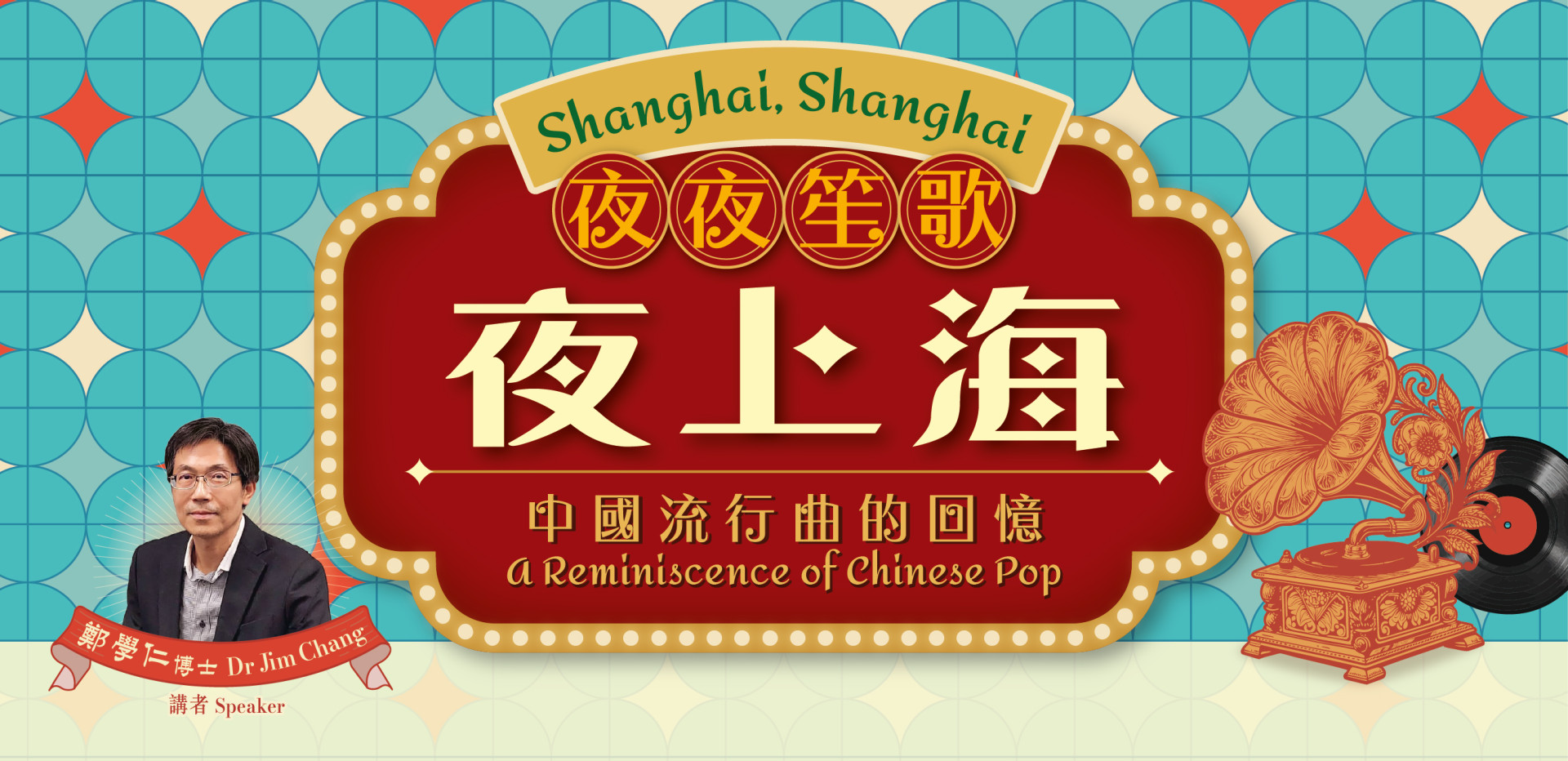
Lecture Series: Shanghai, Shanghai – A Reminiscence of Chinese Pop
The splendour of 1930s Shanghai was borne upon the sweat and toil of generations past, it was what our parents remembered, and what our generation imagines as in our dreams. Since the mid-nineteenth century, the concessions had introduced to Shanghai countless “firsts” typical of modern material life: banking, department stores, gas lamps, electric lamps, telephones, phonographs, motor cars…It was a melting pot of East and West, be that people or things. Shanghai remained a stage of endless revelry, even as the skies began to darken with the approaching storm of war, the city continued to weave yet another living scroll of modern urban life—its own version of the monumental painting scroll Along the River During the Qingming Festival, incarnated in neon and song. It was in this golden era, amidst the splendour of this remarkable time and place, on the banks of the Huangpu River, in this so-called “paradise of the adventurers”, that Chinese pop songs (shidaiqu), a bold and thoroughly modern musical genre, found its voice.
In this Shanghai, Shanghai lecture series, we will walk through a century’s echoes of the popular tunes, remember the people, the moments, and the mythic charm of this legendary era.
(Conducted in Cantonese)
21 Oct (Tue)
Lecture 1: Li Jinhui and the “Minyue Concert”
No discussion of Chinese popular music would be complete without mentioning Li Jinhui. Often hailed as the “Father of Chinese Pop”. He sowed the seeds of memorable tunes across the Chinese landscape with songs like Drizzle (Maomao Yu). The “Minyue Concert” that he established single-handedly became nothing less than a cradle for a generation of musical and cinematic stars, and for Chinese popular music.
28 Oct (Tue)
Lecture 2: Li Jinguang and his “Tuberose”
"A cool breeze wafts from the south, the nightingale’s song whispers softly, moonlit blossoms drift into slumber—only the evening primrose breathes out its perfume.”
These are the lyrics of a beautiful song that is etched in the memory of many generations of Chinese and never fails to enchant the soul. As soon as you hear the opening bars, which singer do they remind you of—Teresa Teng? Li Hsiang-lan? Or perhaps Li Jinguang, the man dubbed the “King of Song”? How did the “Tuberose” come into being? Let us look back on a legend in the making.
4 Nov (Tue)
Lecture 3: The Romance of Chen Gexin
Nicknamed the “Immortal of Song”, Chen Gexin was once described as “the most charismatic composer in the history of Chinese pop songs”. His legacy demonstrates that he was extraordinarily gifted. His maternal grandfather was Indian, and Chen had gifted the world with melodies of haunting beauty and enduring charm. An inherently romantic and sensitive artist, Chen lived a life steeped in the classical Chinese arts of poetry, wine, calligraphy, the qin, and chess. Though he died relatively young at 47, he left behind a treasure trove of Chinese pop music of Old Shanghai.
11 Nov (Tue)
Lecture 4: Engrossing Shanghai Tunes
Shanghai in the early 20th century was an epicentre of culture and the arts, with literary icons and talented artists dominating different fields. From the ballrooms, music halls and films emerged a distinguished style which was later named “Hai pai” (Shanghai-style). Even the warped prosperity of the “Isolated Island” period (1936 - 1947) lent itself to a dazzling decade of Shanghai pops. Each added their voice to the symphony of the times, contributing masterpieces that continue to resonate as cherished classics of Old Shanghai.
19 Nov (Wed)
Lecture 5: The Gorgeous Li Hsiang-lan
From the time when she was born, to her birthplace, her background during her growing up years, and the people she met, Li Hsiang-lan (also known as Yoshiko Yamaguchi) seemed destined for an extraordinary life. Every aspect of her story marked her as a figure of fate and fascination. In this lecture, we will look back on the first half of her life journey, this “beauty among beauties”. We will also hear this coloratura soprano’s mesmerising singing, and review how she captivated Old Shanghai in the most turbulent times.
25 Nov (Tue)
Lecture 6: A Tale of Two Cities
The year 1949 marked a turning point in modern Chinese history. Endless migration moves — from north to south and the other way round — brought partings and reunions, joy and sorrow, and complexity of emotions to all. China was undergoing waves of changes. For many Shanghai entrepreneurs and intellectuals, moving to Hong Kong and starting a new life on its borrowed land meant they could continue with their borrowed dreams. Composers such as Li Houxiang, Yao Min, and Wang Fu-ling brought the Shanghai soundscape to this British enclave. So what impact did their arrival have on the indigenous culture of Hong Kong?
(Information provided by the speaker)
(English translation provided by KCL Language Consultancy Ltd)
Each lecture will run for about 1 hour and 30 minutes.
The programme does not represent the views of the Leisure and Cultural Services Department.
The presenter reserves the right to change the programme and substitute the speaker.
TICKETING
DATE VENUE PRICE 21.10.2025 (Tue)
19:30
19:30
28.10.2025 (Tue)
19:30
19:30
04.11.2025 (Tue)
19:30
19:30
11.11.2025 (Tue)
19:30
19:30
19.11.2025 (Wed)
19:30
19:30
25.11.2025 (Tue)
19:30
19:30
AC2, 4/F, Administration Building, Hong Kong Cultural Centre
$80
DATE21.10.2025 (Tue)
19:30
19:30
28.10.2025 (Tue)
19:30
19:30
04.11.2025 (Tue)
19:30
19:30
11.11.2025 (Tue)
19:30
19:30
19.11.2025 (Wed)
19:30
19:30
25.11.2025 (Tue)
19:30
19:30
PRICE
$80