
|
09
Sat
May
2026
|
19
Sat
Sep
2026
|

|
Various venues |
|
DATE
|
VENUE
|
 PRICE
PRICE
|
|
09.05.26(Sat) |
Various venues |
|
DATE
|
09.05.26(Sat) - 19.09.26(Sat) |
|
VENUE
|
Various venues |
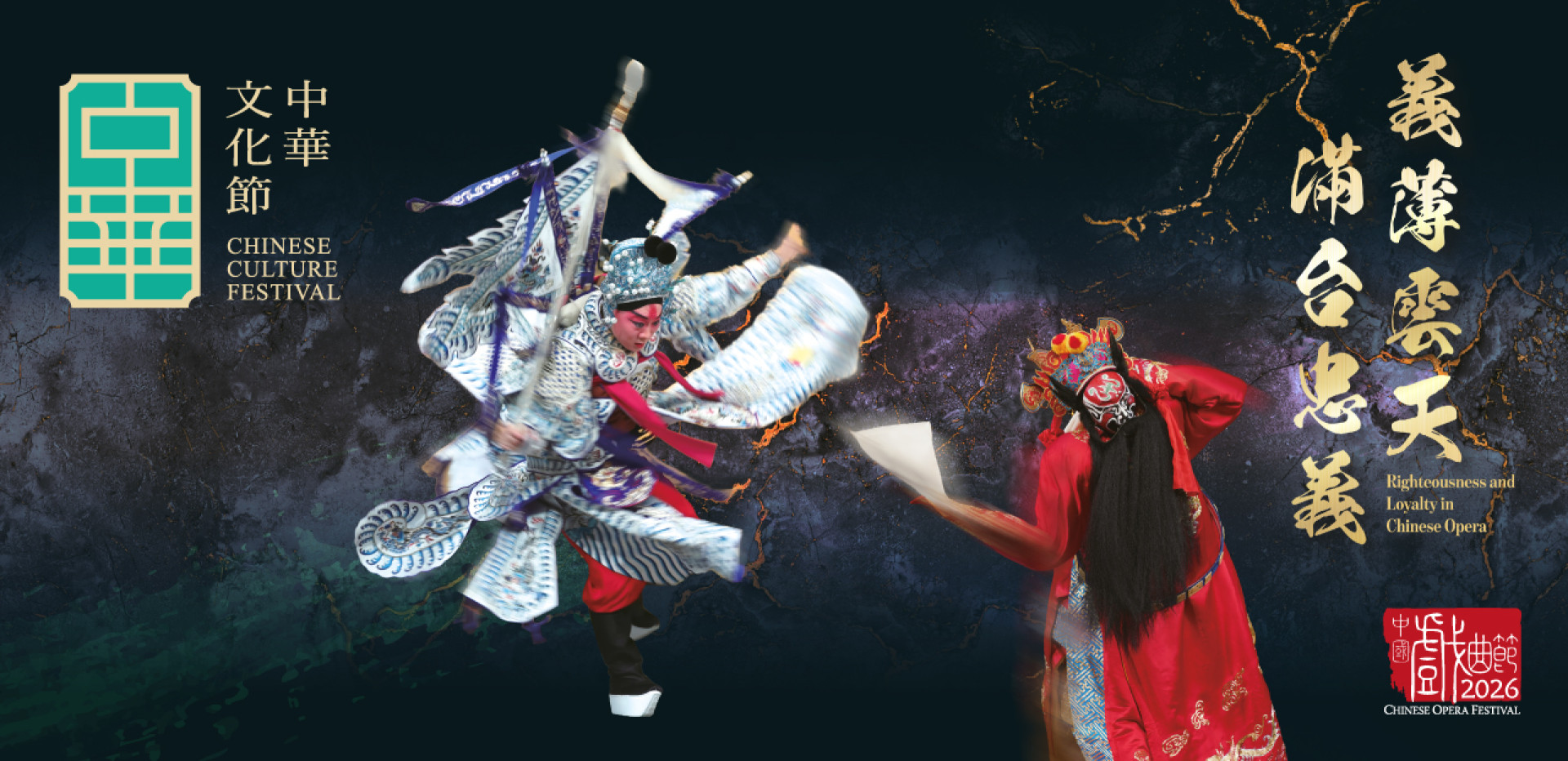
As a core component of the Chinese Culture Festival, the theme of this year Chinese Opera Festival is "Righteousness and Loyalty in Chinese Opera". The programme features a selection of classics from different operatic genres that expounds the values of loyalty and righteousness. Leading troupes representing mainstream genres and three regional bangzi vocal traditions will present heartrending portrayals of classic heroic figures on Chinese opera stage. Through showcasing the four aspects of expertise required in Chinese opera – singing, line-delivery, acting and martial arts – the virtuosic performers will take the audience on journeys of courage, sacrifice and moral integrity that have long defined the heroic ethos of Chinese culture.
Chinese Opera Festival 2026 Opening Programme: Showcase of Peking Opera Actors in Full Armour Roles
Due to injury, Wei Xuelei, performer of Jingju Theater Company of Beijing, is unable to attend the Meet-the-Artists session and to perform as planned. Lu Meng, performer of Hubei Provincial Peking Opera Theatre will replace him as a speaker of the talk, while Xi Zhonglu and Chen Lin of Shanghai Jingju Theatre Company will take Wei' s place in the performance.
Introduction
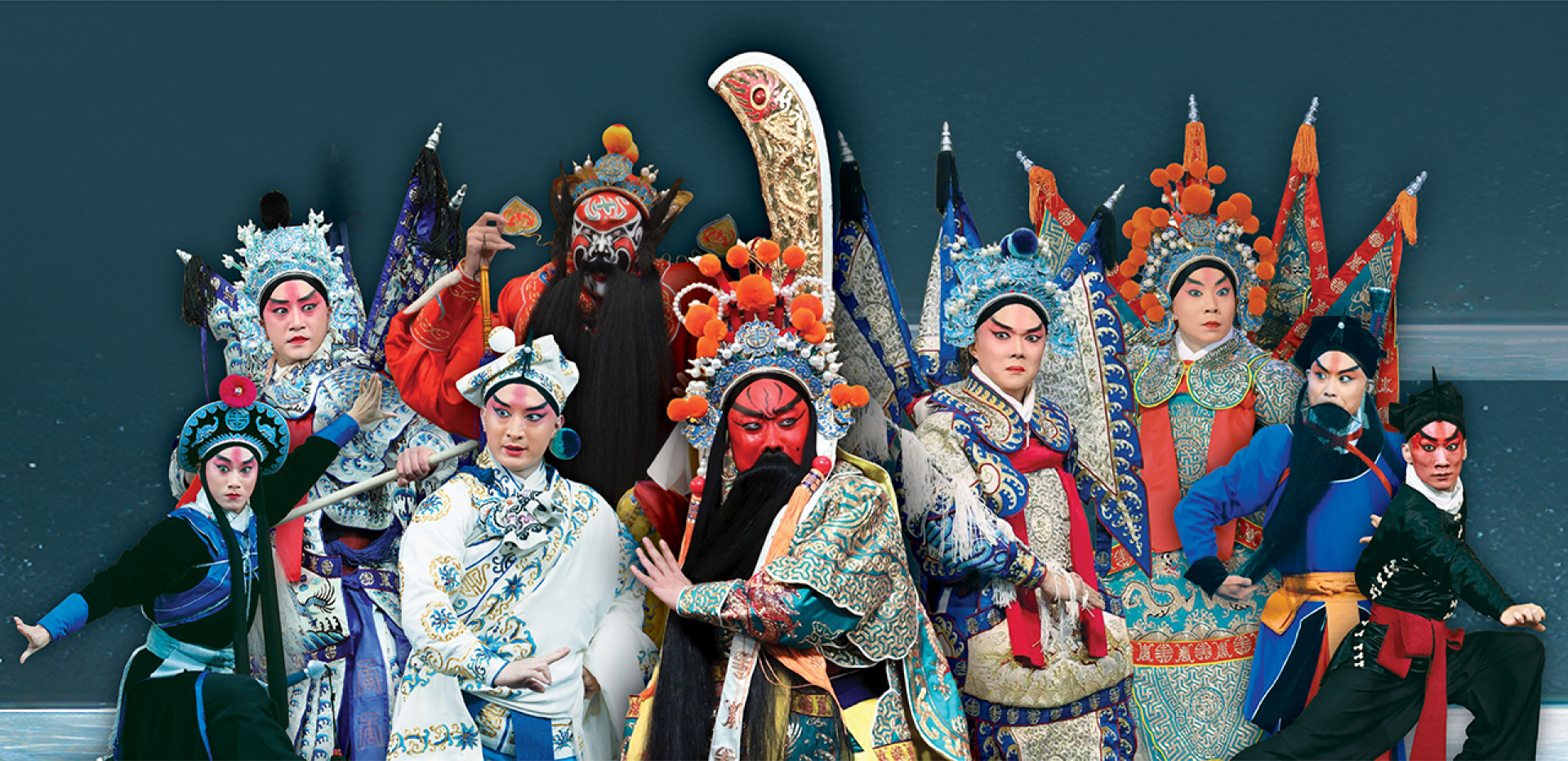
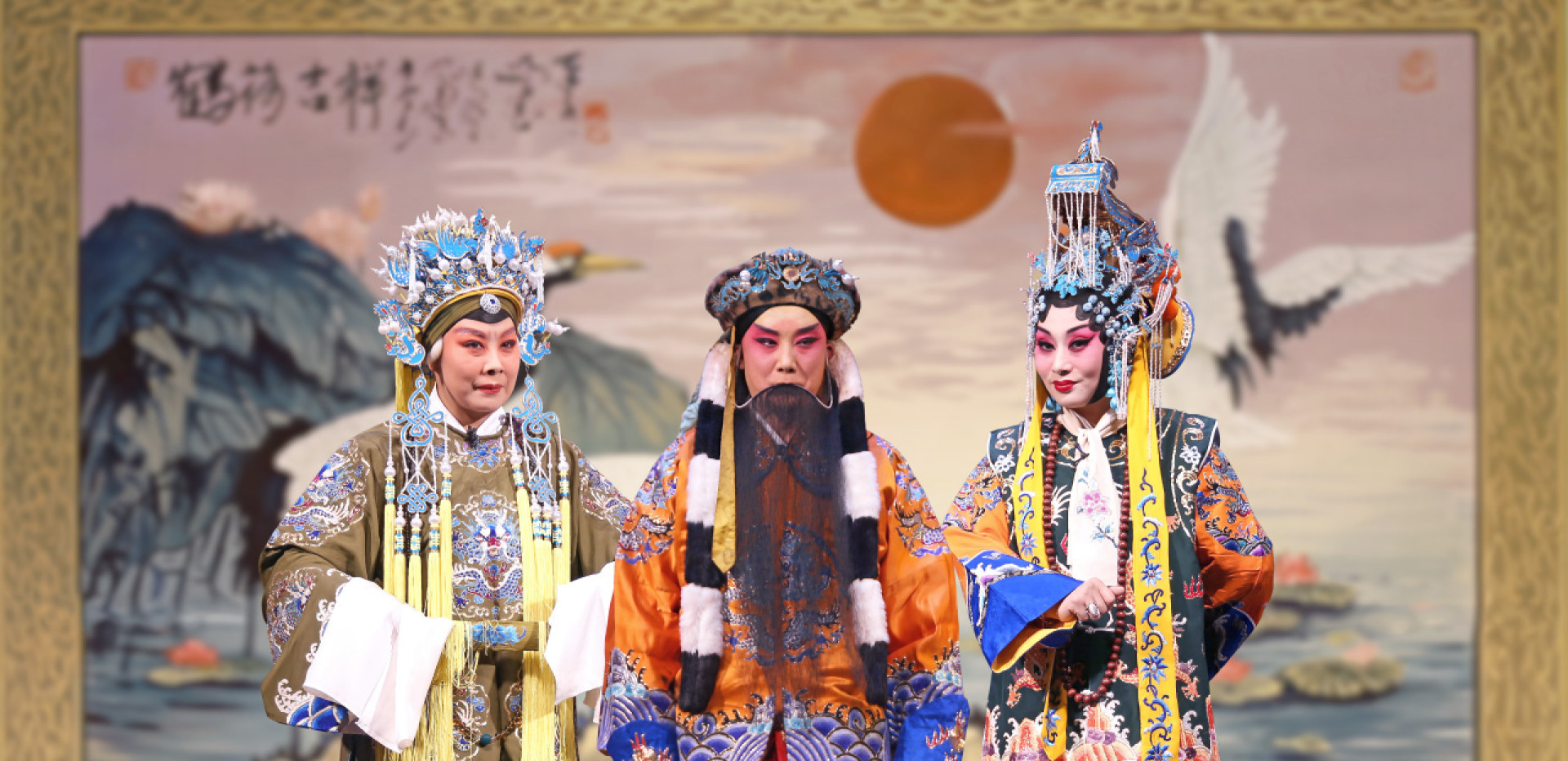
Leading wusheng (military male) heavyweights from four major Peking Opera troupes assemble unprecedentedly in Hong Kong to flex their muscles in three fascinating programmes. Celebrated as 'the foremost wusheng of our time', Xi Zhonglu joins Wei Xuelei of the Jingju Theater Company of Beijing and Chen Lin of the Shanghai Jingju Theatre Company to set the stage with The Battle at Changbanpo and The Incident at Hanjin Crossing, spectacular works that capture the heroic spirit of the Three Kingdoms. Wang Xilong, from the Shanghai Jingju Theatre Company, elaborates his military painted-face role in two iconic works. Wang Daxing from the Tianjin Peking Opera Theatre demonstrates valour of the fully armoured role in The Pulley, while Lu Meng of the Hubei Provincial Peking Opera Theatre presents the dynamic close-combat style in Seven for a Righteous Cause.
The Martial Art of Wusheng in Peking Opera
The wusheng (martial male) within the sheng role type of Peking Opera can broadly be divided into two subtypes: changkao and duanda. Changkao wusheng wear full armour and thick-soled boots, portraying commanding generals such as Guan Yu and Zhao Yun with dignified bearing alongside combat techniques. Duanda wusheng, by contrast, wear fitted costumes and light footwear, depicting heroic fighters through agile, swift, and acrobatic movements. Three mainstream stylistic schools of wusheng personae emerged towards the turn of the 20th century: the Yu (Jusheng) school was fierce and maverick, pioneering in adopting painted-face outlook for warriors; the Li (Chunlai) school was renowned for acrobatic tumbling and nimble physicality; and the Huang (Yueshan) school combined virtuosic singing with beard technique. Later, the Yang (Xiaolou) and Gai (Jiaotian) schools rose to prominence — celebrated respectively as ‘Northern Yang’ and ‘Southern Gai’— shaping the modern aesthetics of wusheng artistry.
Programme Details
26/6 7:30pm
Lin Chong on the Run Main Cast : Zhao Hongyun
The Battle at Changbanpo and The Incident at Hanjin Crossing Main Cast : Xi Zhonglu, Wei Xuelei, Chen Lin
Lin Chong on the Run is a well-known Peking Opera featuring duanda wusheng roles, with equal emphasis on vocals and acting. Zhao Hongyun from the Shanghai Jingju Theatre Company successfully conveys the derring-do spirit of a Water Margin hero and the desolation of a fallen warrior. The Battle at Changbanpo and The Incident at Hanjin Crossing showcase scenes of combats from the Three Kingdoms, performed by a succession of wusheng actors. Acclaimed master Xi Zhonglu, hailed as today’s foremost wusheng, commands the stage as Guan Yu with impressive manoeuvres of courage, valour and composure. Wei Xuelei of the Jingju Theater Company of Beijing and Chen Lin of the Shanghai Jingju Theatre Company share the portrayal of Zhao Yun, dazzling with their epic warfare feats. The two-part programme contrasts melancholic solitude with all-out combats, demonstrating the dynamic range of martial artistry in Peking Opera.
The running time of the performance is approximately 2 hours and 45 minutes including an intermission of 15 minutes.
27/6 7:30pm
The Pulley Main Cast : Wang Daxing
Wu Song Checking in at the Inn Main Cast : Lu Jialiang
Rescuing His Sister at the Bright Sun Mansion Main Cast : Wang Xilong
The Pulley is regarded as a touchstone of wusheng mastery, constituting to generations of skilled virtuosi each with their respective style. In this programme, Wang Daxing, a Class One Performer of the Tianjin Peking Opera Theatre, demonstrates his formidable command of challenging routines such as qiba, extended combat, and ‘overturning the pulleys’ technique in his portrayal of General Gao. The acclaimed Wu Song Checking in at the Inn of the Gai school features Shanghai Jingju Theatre Company rising star Lu Jialiang, whose agile movements bring humour and vitality to the piece. In the masterpiece Rescuing His Sister at the Bright Sun Mansion of the Li (Huiliang) school, Class One Performer Wang Xilong’s martial choreography is outstanding in portraying the spoilt-brat Gao Deng with striking poses. All three works reveal the diversity and stylistic brilliance of wusheng traditions in Peking Opera.
The running time of the performance is approximately 3 hours including an intermission of 15 minutes.
28/6 2:30pm
Zhong Kui Marrying His Sister Off Main Cast : Wang Xilong
Seven for a Righteous Cause Main Cast : Lu Meng
At the Crossroads Main Cast : Hao Shuai, Hao Jie
On Iron Cage Mountain Main Cast : Xi Zhonglu
Refined by master Li Huiliang, Zhong Kui Marrying His Sister Off has become a signature wusheng piece combining singing, line delivery, and martial choreography. Wang Xilong, inheritor of the Li school, captures the role’s delicate balance of humour and poignancy. Both Seven for a Righteous Cause and At the Crossroads are classics of the Gai school. In the former, Class One Performer Lu Meng of the Hubei Provincial Peking Opera Theatre leads a dynamic ensemble, embodying the gallant spirit of outlaw heroes through vigorous martial choreography. The latter features Shanghai Jingju Theatre Company performers Hao Shuai and his long-time partner Hao Jie, who are amongst the most celebrated comic-action duets playing wusheng and wuchou (martial comic) roles. On Iron Cage Mountain is a major painted-face wusheng showcase, while Xi Zhonglu closes the evening as General Jiang Wei, with his commanding presence and dazzling combat sequences.
The running time of the performance is approximately 3 hours including an intermission of 15 minutes.
Grand Theatre, Hong Kong Cultural Centre
$560 $460 $360 $260
Programme of HKICH Month
Lyrics and dialogue with Chinese and English surtitles.
Please refer to "Chinese Culture Festival Booking Guide" for booking details.
The content of the programme does not represent the views of the Culture, Sports and Tourism Bureau and Leisure and Cultural Services Department. The presenter reserves the right to change the programme and substitute artists.
Luoyang Yu Opera Troupe
Introduction
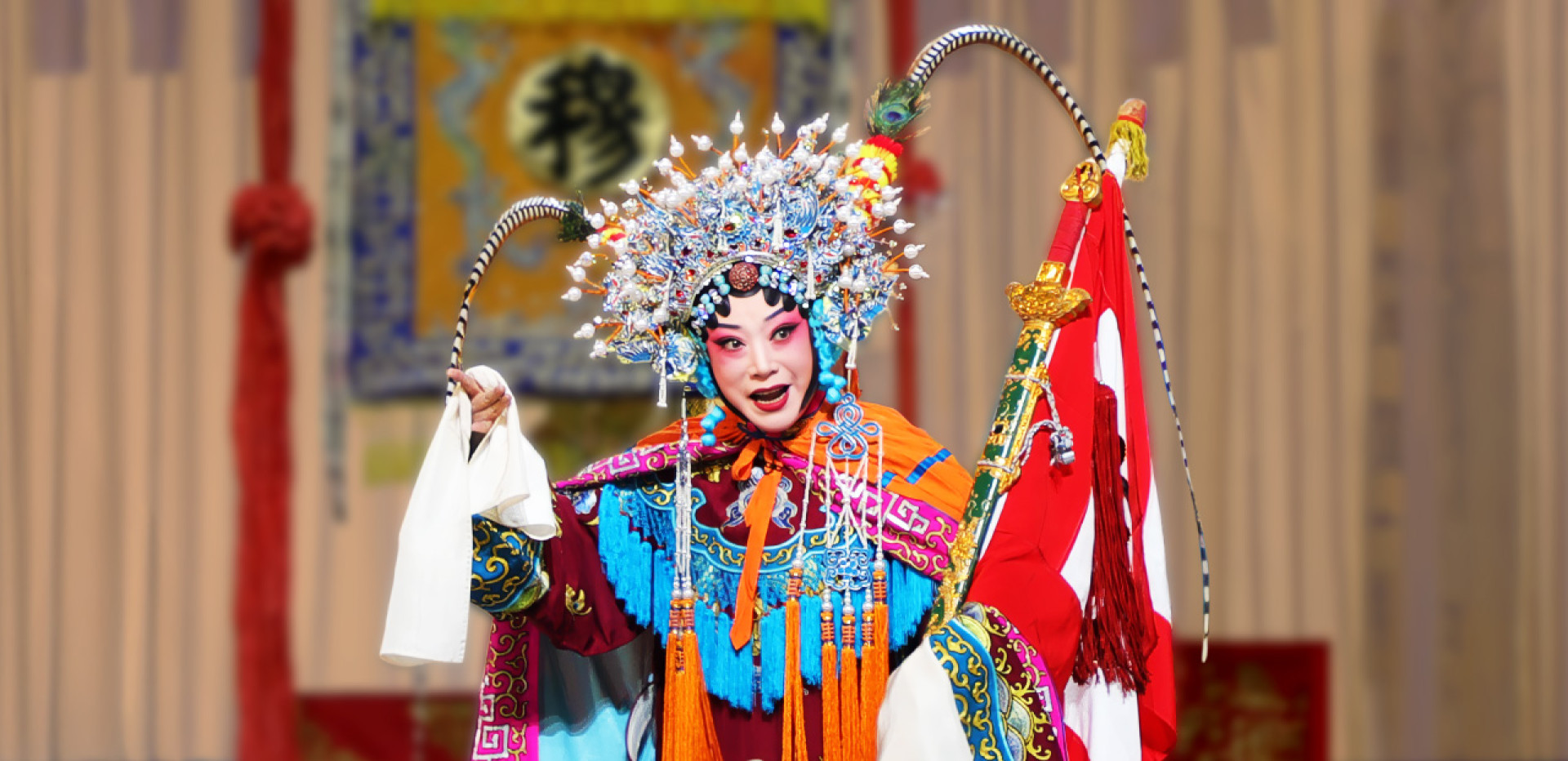
Luoyang, a city of elegance, is famous for its iconic peonies, with Yu Opera as its artistic soul. The legendary Ma Jinfeng, creator of the shuai dan (military-leading female) role type, combines stylised movements of qingyi (virtuous female), daomadan (sword-wielding and riding female), and wusheng (martial male), and is acclaimed as 'the Peony of Luoyang'. Specialised in the shuai dan role, her disciple Guan Meili will be joined by Plum Blossom Award winners and Class One performers to present signature works of the Ma School: Mu Guiying Takes Command, which exemplifies heroic feminine valour; Demanding Justice from the Emperor, a classic Yu Opera comedy that sparkles with wit and vivacity through the female lead; and The Spear as a Token of Love, a bitter love story spanning four decades. Selected excerpts from diverse stylistic traditions will complete the programme.
Yu Opera
Yu Opera, also known as Henan Bangzi, is a branch of the clapper opera (bangzi) vocal system that emerged during the period of contention between the 'Elegant' and 'Popular' stylistic schools during the Ming dynasty. Fusing qin-qiang, Puzhou Bangzi, and local folk theatrical forms of Henan, distinct regional schools took shape – the Xiangfu style (around Kaifeng), Eastern Henan style (around Shangqiu), Western Henan style (around Luoyang), and Shahe style (around Luohe). Its vocal style is sonorous and forceful, yet also fluid and lyrical, while the overall pacing is vivid and intense. The unique operatic style has produced many great masters through the ages, among whom the 'Five Divas' — Chang Xiangyu, Ma Jinfeng, Chen Suzhen, Cui Lantian, and Yan Lipin — are the most widely celebrated. Of these, Ma Jinfeng created the distinctive shuaidan role type, which tactfully fuses the poise of qingyi (virtuous female), the heroic bearing of daomadan (sword-wielding and horse-riding female), and the vigour of wusheng (martial male). Ma's rich, mellow voice and bold, dashing stylised movements had won her the epithet 'Peony of Luoyang' .
Programme Details
17/7 7:30pm
Mu Guiying Takes Command
Main Cast: Guan Meili, Wang Hui (Guest), Jia Wenlong (Guest) , Zhao Xiaoxing, Liu Xiangyang
In 1953, Ma Jinfeng, a leading figure in Yu Opera who is acclaimed as 'National Treasure', joined hands with playwright Song Ci to adapt the traditional play Expedition to the East at an Old Age into Mu Guiying Takes Command. The storyline focuses on Mu Guiying, now past 50, who once again takes command in a time of national peril. Ma’s brilliant performance triggered an immediate sensation in the operatic world and drew the attention of the Peking Opera legend, Mei Lanfang. He not only took her in as his disciple, but also introduced Mu Guiying Takes Command into the Peking Opera repertory, making it popular nationwide. As this year's 'City in Focus' highlight, Guan Meili, a first-generation disciple of Ma, revives the splendour of the Ma-school shuaidan style. As the curtain rises, Guan offers an awe-inspiring stage presence in her crimson warrior robe as a commanding war marshal. Her passionate singing adds depth to the character portrayal, which induces a feminine touch into her bravery and determination in fighting for the country again. Sharing the stage are Plum Blossom Award winners and Class One performers Wang Hui as Dowager She, and Jia Wenlong as the Song Emperor.
The running time of the performance is approximately 2 hours and 15 minutes including an intermission of 15 minutes.
18/7 7:30pm
Excerpts
Emotional Outpouring at the South Camp from The Spear as a Token of Love, At the Imperial Court from Demanding Justice from the Emperor, Interrogating the Husband, The Ingenious County Magistrate, Setting Off for Battle from Five Generations of Loyal Generals
Main Cast: Guan Meili, Wang Hui (Guest), Jia Wenlong (Guest), Bo Qing (Guest), Chen Dahua, Liu Yalin
This programme is a selection of representative classics by Yu Opera masters. The Spear as a Token of Love and Demanding Justice from the Emperor – two classics of Ma Jinfeng school – and Mu Guiying Takes Command are three iconic pieces that exemplifies the diversity of female portrayals in Yu Opera. Through nuanced delivery of the female lead's singing, Emotional Outpouring at the South Camp highlights the agitated state of Jiang Guizhi prior to meeting her long lost husband. In the comic Demanding Justice from the Emperor, Madam Cheng leads a group of high-ranking officers' wives to storm the imperial court to save an upright official. The versatile character of Madam Cheng is skilfully portrayed via a fascinating combination of podan (shrewish female), caidan (female clown) and qingyi roles. Interrogating the Husband is a representative work of the Yan stylistic school. The emotional manoeuvres between Yan Lanzhen and her husband Zeng Rong reveal the inner struggle of a typical guimendan (young female role). The Ingenious County Magistrate features the wenchou (clown role) as its protagonist; its operatic gestures incorporate details drawn from everyday life and are lively and humorous. In the Chang Xiangyu school classic Setting Off for Battle, Dowager She leads the women warriors of the Yang family into battle, and the impassioned singing raises the sense of loyalty towards family and country to a powerful climax.
The running time of the performance is approximately 2 hours and 15 minutes including an intermission of 15 minutes.
Auditorium, Ko Shan Theatre New Wing
$390 $290 $190
Lyrics and dialogue with Chinese and English surtitles.
Please refer to "Chinese Culture Festival Booking Guide" for booking details.
The content of the programme does not represent the views of the Culture, Sports and Tourism Bureau and Leisure and Cultural Services Department. The presenter reserves the right to change the programme and substitute artists.
The 'Chinese Culture for All' performance of Luoyang Yu opera Troupe is sponsored by the Chamber of Young Snow.

Hebei Bangzi Opera Theatre of Hebei Province
Introduction
One of the most expressive regional opera genres of Hebei Province is its Bangzi Opera, known for its impassioned intensity, soaring vocal lines, and richly varied stylised movements. The Hebei Bangzi Opera Theatre of Hebei Province returns to Hong Kong with a stellar line-up of Plum Blossom Award winners, four of whom will lead the cast in Zhong Kui the Ghosteater, a signature production and perennial favourite since its premiere in the 1980s. The Magic Lotus Lantern is a mythological drama that culminates in the climactic close, when the son axes open the mountain to rescue his celestial mother. Crossing dimensions of mortals, spirits and celestials, the performance presents highly challenging martial art techniques enhanced by delicate dance movements. A dedicated programme of excerpts further showcases the vitality and living legacy of Hebei Bangzi Opera.
Hebei Bangzi Opera
Hebei Bangzi Opera took shape around the late Qing dynasty, first building on Shanxi and Shaanxi Bangzi Opera, then developed its own distinctive northern style through assimilating Hebei dialects and folk arts, elements from Peking Opera and Kunqu Opera. It was popular across the Beijing–Tianjin–Hebei region. The genre was historically known by several names, including Jing Bangzi, Wei Bangzi, and Zhili Bangzi. In 2006, Hebei Bangzi Opera was inscribed onto China's National List of Intangible Cultural Heritage. The vocal style is powerful and impassioned, characterised by a high register and the combined use of natural and falsetto voices, giving the singing a bold and penetrating tone. The music is led by the banhu (a high-pitched bowed string instrument), while wooden clappers mark the rhythm with bright, resonant beats. Its musical patterns are varied and dynamic. Performance style is direct and vigorous. Civil plays are marked by strong emotional expression, while martial plays are energetic and spectacular, often incorporating demanding acrobatic techniques to heighten dramatic tension. With its distinctive vocal power, rhythmic vitality and expressive stagecraft, Hebei Bangzi Opera remains one of the most representative regional opera genres of Hebei Province.
Programme Details
24/7 7:30pm
Zhong Kui the Ghosteater
Main Cast: Wu Guiyun, Hao Shichao, Sun Na, Qiu Ruide, An Shuancheng
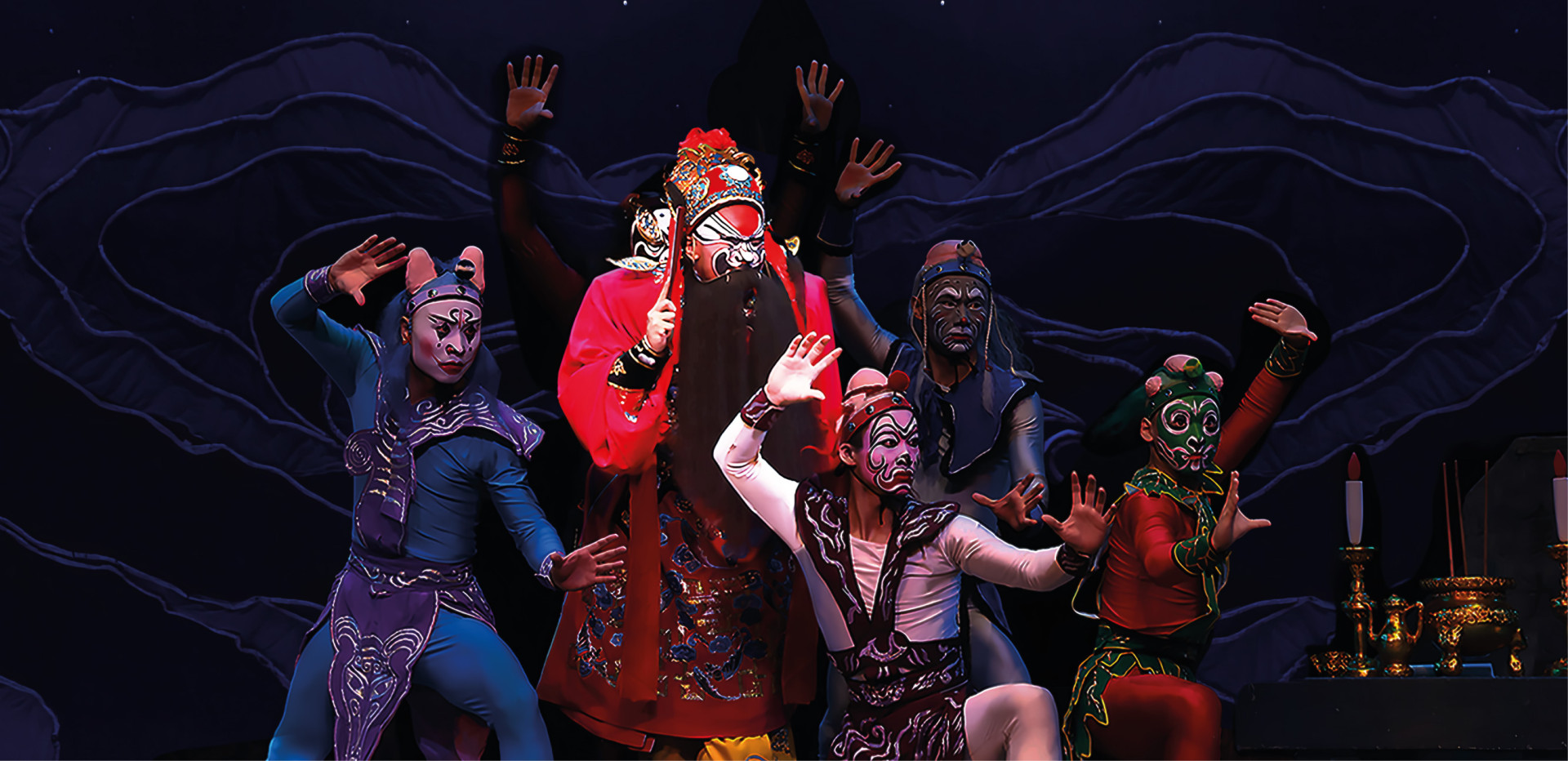
Zhong Kui the Ghosteater was created by the Hebei Bangzi Opera Theatre of Hebei Province in the 1980s. The story is based on the folk tale of Zhong Kui, an upright scholar who died in protest of corruption in the imperial examinations, and was appointed in the underworld as the divine catcher of demons. It has been performed more than 2,000 times in China and abroad since its premiere. This performance features four Plum Blossom Award winners in lead roles, including Wu Guiyun, in a rare female wusheng (martial male) interpretation, who combines elegant scholarly bearing with resolute strength; and Hao Shichao, who integrates the expressive features of young male, martial male and painted-face roles. The production is notable for its transformation of role types — from young scholar to painted-face hero — mirroring Zhong Kui's journey from man to spirit and deity. Hebei Bangzi Opera's musical style blends Kunqu and Bangzi elements, while the staging incorporates dance and demanding acrobatic feats, showcasing the genre's distinctive theatrical vitality.
The running time of the performance is approximately 2 hours and 30 minutes including an intermission of 15 minutes.
25/7 7:30pm
The Magic Lotus Lantern
Main Cast: Sun Na, Hao Shichao, Qiu Ruide, An Shuancheng
First staged in 1960, The Magic Lotus Lantern is another celebrated classic of the Hebei Bangzi Opera repertoire. The story goes like this: the Goddess of Mount Hua falls in love with the mortal Liu Yanchang. After they get married, she gives birth to a son, Chenxiang. Her brother God Erlang suppresses her under Mount Hua. When Chenxiang grows up, he axes the mountain open and rescues his mother, thus reuniting the family. The production draws upon folk legends, drama and dance drama, and the stage choreography integrates ribbon dance, fan dance and peacock dance into the martial movements. Masterly skills such as spinning leaps, spear kicks, backflips, and many more make captivating sights. As for the music, it moves beyond traditional Bangzi Opera rhythmic patterns and introduces Kunqu tunes, folk songs as well as choral elements inspired by Gan Opera. Combining powerful singing with thrilling combat sequences, The Magic Lotus Lantern has remained a favourite with audiences for over six decades.
The running time of the performance is approximately 2 hours and 30 minutes including an intermission of 15 minutes.
26/7 2:30pm
Excerpts
Crying at the City Wall from North and South Make Peace
Main Cast: Wu Guiyun, Zhao Xuan, Zhao Ke
The Hu Homestead
Main Cast: Zhang Jingyue, An Shuancheng, Qi Zengchao
On the Execution Ground from The Injustice Done to Dou E
Main Cast: Sun Na, Wang Ping, Zhang Bin
The Bloody Battle at Waqiao from Waqiao Pass
Main Cast: Hao Shichao, Sun Na, Qiu Ruide
This selection of excerpts from Hebei Bangzi Opera showcases a variety of vocal styles, martial arts choreography, masterful acrobatic techniques, and consummate acting in dramatic scenes. Crying at the City Wall from North and South Make Peace tells how the captive Yang Yanshun crosses battle lines to visit his mother. Torn between loyalty to his country and lial devotion, he expresses his anguish in heartrending singing and formulaic routines. In The Hu Homestead, the heroine Hu Sanniang engages in a fierce close combat with the Liangshan outlaws. The role of the female warrior displays a distinctive blend of grace and strength. On the Execution Ground from The Injustice Done to Dou E highlights Hebei Bangzi Opera's expressive vocal style. With her arms tied up and restrained, Dou E relies solely on singing, facial expression and limited movement to proclaim her innocence, her lament conveying overwhelming grief and injustice. The Bloody Battle at Waqiao from Waqiao Pass is a dazzling display of martial choreography.
The running time of the performance is approximately 2 hours and 30 minutes including an intermission of 15 minutes.
Auditorium, Kwai Tsing Theatre
$480 $380 $280 $180
Lyrics and dialogue with Chinese and English surtitles.
Please refer to "Chinese Culture Festival Booking Guide" for booking details.
The content of the programme does not represent the views of the Culture, Sports and Tourism Bureau and Leisure and Cultural Services Department. The presenter reserves the right to change the programme and substitute artists.
Jiangsu Performing Arts Group Kun Opera Theatre
Introduction
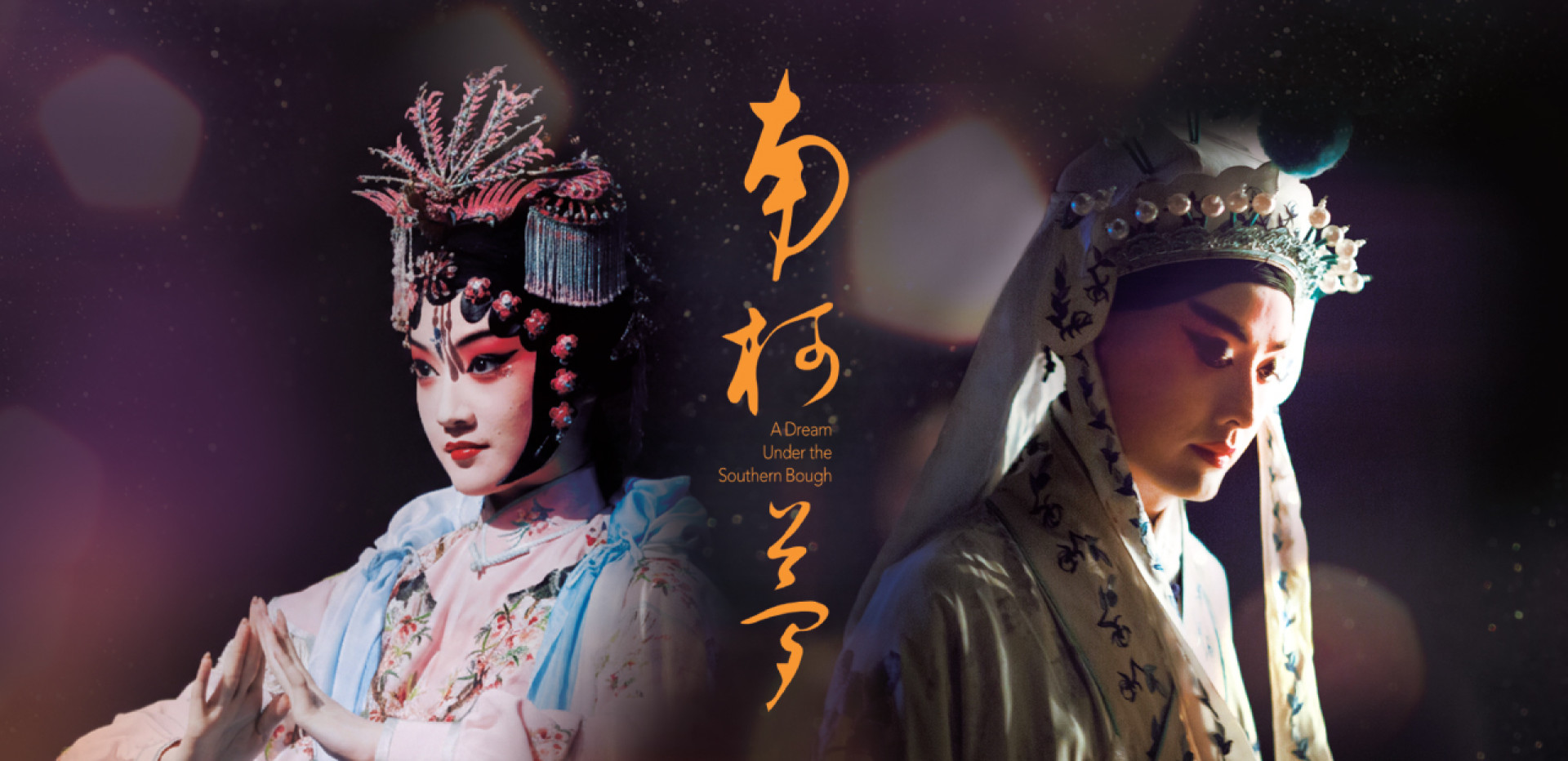
A Dream Under the Southern Bough is a dramatic revelation of the illusions of worldly glory created by the Jiangsu Performing Arts Group Kun Opera Theatre. It is a masterfully adapted version of The Dream of Nanke written by Tang Xianzu, executed as a full-scale production in two parts. The story tells of a scholar Chunyu Fen's sojourn in a dream to the kingdom of ants, where he experiences the rise and fall of power, love won and lost, and the fleeting nature of wealth and prosperity, only to awaken to life's ultimate emptiness. Plum Blossom Award winner Shi Xiaming will lead 4ᵗʰ and 5ᵗʰ generation performers of the theatre in a reinterpretation that blends classical elegance with contemporary theatrical concepts, featuring lyrical poetry, mellifluous melodies, and ethereal staging through lighting. The audience will travel through a dreamlike world of poetic beauty and philosophical reflection in this highly imaginative dramatisation.
The Dream of Nanke is one of the four legendary plays collectively known as ‘Four Dreams of Linchuan’ by the Ming dynasty playwright Tang Xianzu. The original script comprises 44 scenes, including arias and set tunes, but modern staging usually presents only two scenes — The Flower Vendor Reports and The Celestial Palace. In 2012, the Jiangsu Performing Arts Group Kun Opera Theatre condensed it into 17 scenes in two parts, under a title of A Dream Under the Southern Bough. After more than a decade of fine-tuning, meticulous crafting in strict adherence to the conventions of Kunqu and the stylistic elegance of Southern Kunqu, this modern version has become a signature production of the company, notable for its full range of role types, intact with both civil and martial elements.
This performance features Kunqu actors led by Plum Blossom Award winner and company president Shi Xiaming, together with 4th generation artists including Zhao Yutao, Xu Sijia, and Sun Jing, and 5th generation talent He Xinyue, etc. Mentors and disciples share the stage, carrying forward the fine legacy of this operatic legend.
Programme Details
31/7 7:30pm
A Dream Under the Southern Bough - Part One Main Cast: Shi Xiaming, He Xinyue, Zhao Yutao, Xu Sijia, Sun Jing
The plot unfolds in two parts. The first tells of how Chunyu Fen, a down-and-out military officer, gets drunk and falls asleep beneath a pagoda tree during the Ghost Festival. In his dream, he is guided by a purple-robed official to enter the Ant Kingdom – Huai’ an, an idyllic land of harmony and peace, where people lead a flourishing life under the sagacious government of the king. He marries Princess Yaofang, is appointed governor of Nanke Prefecture, and rises to the pinnacle of success. Everyone enjoys the glamourous and serene existence in this illusory world. It is not until Chunyu and the princess need to gear up with armour and weapons that euphoria is shattered, foretelling a stormy disaster that is to emerge in the second part.
The running time of the performance is approximately 2 hours and 30 minutes including an intermission of 15 minutes.
1/8 7:30pm
A Dream Under the Southern Bough - Part Two Main Cast: Shi Xiaming, He Xinyue, Zhao Yutao, Xu Sijia, Sun Jing
Part Two emphasises psychological depth, a great challenge on the performers’ artistry. Gravely ill and aware that she won’t live long, Princess Yaofang expresses her sorrow in the aria Ji-Xian-Bin, a plaintive, deeply moving tune. The scene Swinging Parties pushes the whole piece into an emotional climax forcing Chunyu Fen on a path of no return. In the final scene, a torrential storm destroys the Ant Kingdom. Chunyu asks the Monk Qixuan to deliver the souls of the departed. From reluctance to letting go, Chunyu finally awakens to realise that 20 years of rise and fall are no more than a fleeting dream. He attains spiritual enlightenment as he reaches the end of a journey of love, ambition, and self-realisation, and becomes a monk himself.
The running time of the performance is approximately 2 hours and 30 minutes including an intermission of 15 minutes.
Auditorium, Sha Tin Town Hall
$500 $400 $300 $200
Lyrics and dialogue with Chinese and English surtitles.
Please refer to "Chinese Culture Festival Booking Guide" for booking details.
The content of the programme does not represent the views of the Culture, Sports and Tourism Bureau and Leisure and Cultural Services Department. The presenter reserves the right to change the programme and substitute artists.
Shangdang Bangzi Opera Theatre of Jincheng City
Introduction
Shangdang Prefecture, located atop the Taihang Mountains, is the birthplace of Shangdang Bangzi Opera, one of the four Bangzi Opera genres of Shanxi Province. Shaped by this distinctive landscape, it developed a rich repertoire based on the saga of the loyal Yang generals of the Song dynasty, marked by clear moral contrasts, impassioned singing, and bold, resonant music. On its Hong Kong debut, the troupe will be presenting the classic piece The Banquet at Sanguan, portraying Dowager She's tragic decision to place justice above blood ties. Selected excerpts recount emotional conflicts between loyalty, filial piety, love for one's spouse, and heroic sacrifice on the battlefield. They illustrate how bravery and emotional intensity define the distinctive theatrical impact of Shangdang Bangzi Opera.
Shangdang Bangzi Opera
Shangdang Bangzi Opera is one of the four major Bangzi Opera systems of Shanxi. It emerged in mid-17th century, and became popular in the southeastern region of Shanxi — historically known as Shangdang Prefecture. It reached its artistic peak around the mid-19th century, and spread to Shandong and Hebei. The singing is rooted in the banqiang (rhythmic-melodic) system, supplemented by qupai (set tune) elements. Male and female roles share the same tonal register. Its musical style is steady and vigorous, while the performance aesthetic is bold, impassioned and highly dynamic, marked by expansive gestures and emotional intensity. The traditional repertoire comprises over 700 works, with a strong emphasis on historical and martial narratives, particularly stories of the generals of the patriotic Yang family and the troops under Yue Fei, reflecting Shangdang's long-standing identity as a strategically contested region rich in cultural heritage. In 2006, Shangdang Bangzi Opera was inscribed onto the first National List of Intangible Cultural Heritage.
Programme Details
14/8 7:30pm
The Banquet at Sanguan
Main Cast: Chen Suqin, Qi Suzhen / Dong Xiaoqin (as Dowager She), Zheng Fagen, Li Dan
The Banquet at Sanguan was adapted in the 1960s by Zhao Shuli from the Shangdang Bangzi Opera repertoire of Loyalty, Filial Piety, and Chaste Virtue, based on the legendary folklore Warriors of the Yang Family. Refined through decades of staging, it has become a representative work of the genre. While the plot shares that of Silang Visits His Mother, with Yang Silang (the Fourth Son of the Yang family) taken captive by the Liao army and marries the Liao princess, the plot takes on a totally different track when the son sees his mother, Dowager She. Instead of emphasising his predicament and filial love, he is castigated by his mother, in front of his mother-in-law, Empress Dowager Xiao, for placing personal gain above patriotic duty. Silang's wife, Princess Taohua dies in shame, while Silang, torn by guilt and despair, takes his own life. The production features a cast of virtuosi, including Plum Blossom Award winner Chen Suqin, alongside Qi Suzhen and Zheng Fagen. Their portrayals vividly capture Dowager She's resolute righteousness, Empress Dowager Xiao's grief over the loss of her daughter, and Silang's inner turmoil. Combined with the genre's grand musical style, traditional percussion, and distinctive costume design, the performance embodies the authentic spirit of Shangdang Bangzi Opera.
The running time of each performance is approximately 2 hours and 30 minutes including an intermission of 15 minutes.
15/8 7:30pm
Excerpts
To Kill His Wife
Main Cast: Chen Suqin, Zheng Fagen
Assassinating Empress Dowager Xiao and The Great Battle from Yanmen Pass
Main Cast: Li Dan, Li Fan, Wu Yanyan
Forced into Insanity from Incidents at the Temporary Imperial Palace
Main Cast: Chen Suqin, Zheng Fagen, Wang Zhen
This programme features three excerpts that showcase the vocal and physical virtuosity of Shangdang Bangzi Opera. To Kill His Wife (also known as Wu Han Kills His Wife) tells a tragic tale in which Wang Yulian sacrifices herself to uphold her husband's greater cause. The emotional complexity between husband and wife is conveyed almost entirely through singing, making it a celebrated example of vocal innovation within the genre. Assassinating Empress Dowager Xiao and The Great Battle from Yanmen Pass form part of the Yang family saga and are signature works for the sheng (male) role. Yang Balang (the Eighth Son of the Yang Family), acting under Dowager She's command, infiltrates the Liao camp to assassinate the Empress Dowager Xiao before escaping with his family. Fast-paced and physically demanding, the scenes feature acrobatic feats such as hair-flinging, flips and splits. Forced into Insanity from Incidents at the Temporary Imperial Palace balances singing and acting in portraying Jin Gui, a Han woman in the harem of Emperor Kangxi, who is entangled in palace intrigue. With her child being killed, she is driven into madness. Through powerful, soaring vocals, Chen Suqin renders Jin Gui's psychological breakdown with striking intensity, fully revealing the overwhelming emotional force of Shangdang Bangzi Opera.
The running time of each performance is approximately 2 hours and 30 minutes including an intermission of 15 minutes.
Theatre, Hong Kong City Hall
$390 $290 $190
Lyrics and dialogue with Chinese and English surtitles.
Please refer to "Chinese Culture Festival Booking Guide" for booking details.
The content of the programme does not represent the views of the Culture, Sports and Tourism Bureau and Leisure and Cultural Services Department. The presenter reserves the right to change the programme and substitute artists.
A New Cantonese Opera Ancient Tune of Guangling
Introduction
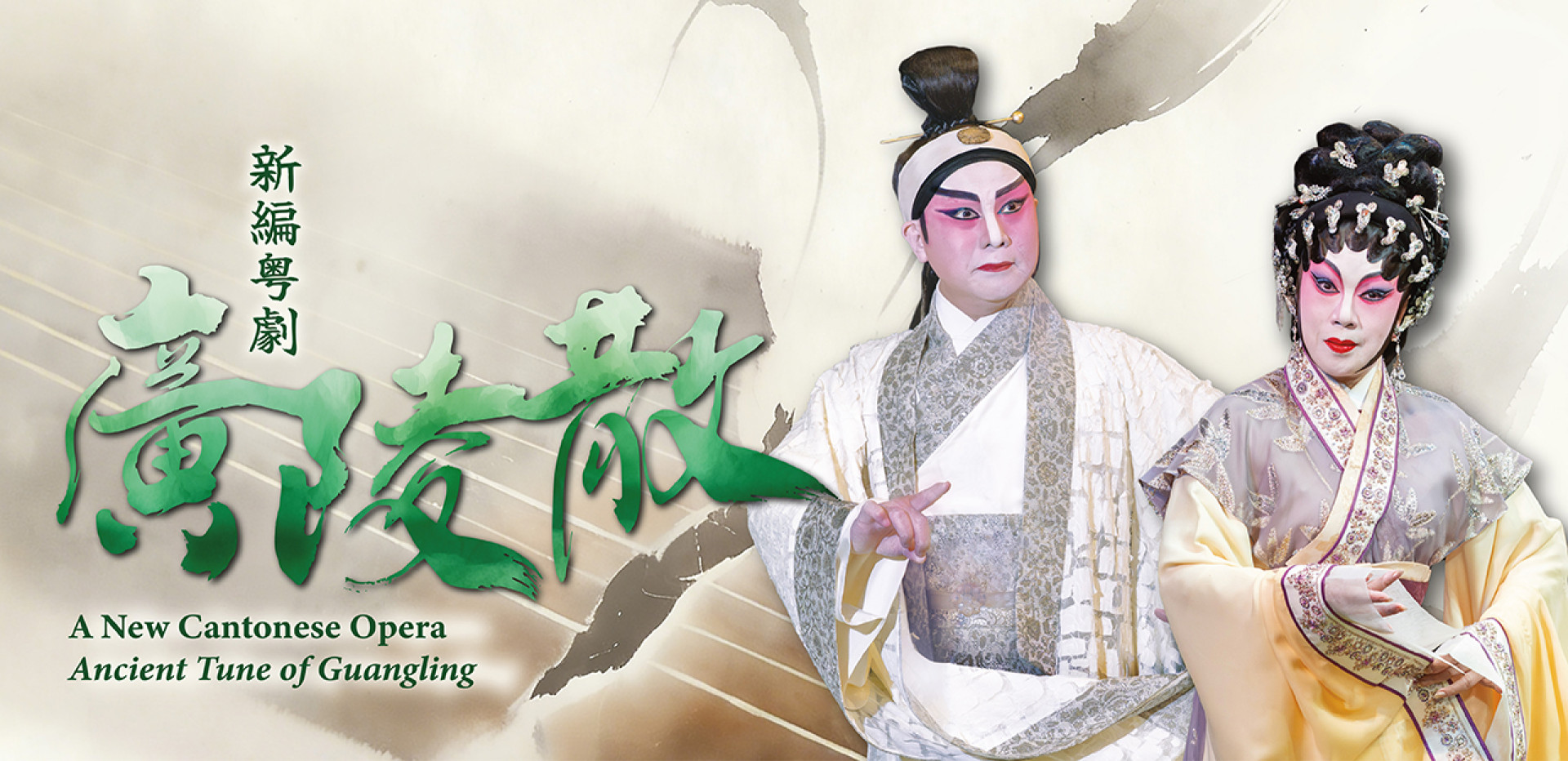
The story takes place during the turmoil of the Wei-Jin era. Ji Kang is a fiercely moral scholar who expresses his integrity through his qin. In a dream, he receives the transcendent melody Ancient Tune of Guangling, through which he also foresees doom. He chooses a plebeian life over the offer of high positions. When political intrigue tightens around him, his scrupulous words of advice lead to his imprisonment. At the execution ground, he calmly plays Ancient Tune of Guangling one final time. The abrupt breaking of a string on his instrument signifies a life laid down for a moral cause. This new Cantonese Opera features both renowned Cantonese Opera stars and rising artists. The production illustrates the lofty ideals and the integrity of the literati through the artistry of Cantonese Opera.
Programme Details
11-12/9 7:30pm
13/9 2:30pm
A New Cantonese Opera Ancient Tune of Guangling
Playwright: Woo Kwok-yin
Artistic Director and Director: Leung Wai-hong
Main Cast: Loong Koon-tin, Tang Mi-ling, Yuen Siu-fai, Liu Kwok-sum, Man Shuet-kau, To Wing-sum, Ng Lap-hei
In the waning years of the State of Wei, the realm is beset by unrest and political strife. The famed scholar Ji Kang cherishes the ambition to bring order to the world; yet the reign of Wei declines, while the Sima clan usurps power. With no recourse, he withdraws into seclusion among the bamboo groves. One night, he dreams of an immortal who imparts to him a piece of qin music that is out of this world – Ancient Tune of Guangling. He is also told both its origins and the ominous fate entwined with it. Upon waking, Ji Kang devotes himself to mastering the piece, and at last unravels its hidden codes. He intends to give the piece its first sounding before his friends, so he calls a gathering of kindred spirits in the bamboo grove. Yet Zhong Hui arrives uninvited. In the clash of words that follows, animosity grows.
Soon the political situation worsens. Sima Zhao murders the sovereign and installs a new emperor, styling himself Prince of Jin, his authority towering above all. Seeking to consolidate his rule, he endeavours to draw celebrated literati into his service. Ji Kang’s close friend Shan Tao, who is a relative of Sima Zhao, is ordered to summon him to office. Zhong Hui also rises in favour through his talents. To evade conscription, Ji Kang conceals himself among the common folks and severs ties with Shan Tao. Yet, in adjudicating a dispute between the Lü brothers, he incurs the resentment of the elder, Lü Xun, who conspires with Zhong Hui to bring false charges against him. Sima Zhao, long wary of Ji Kang’s renown, seizes the chance to strike by another’s hand. Thus Ji Kang, steadfast in righteousness and unbending in speech, is thrown into prison. Three thousand students petition for his pardon, but in vain. At the place of execution, he remains calm, takes up the qin, and plays Ancient Tune of Guangling one last time. As the strings break, his mortal soul departs. Yet his lofty morals and integrity endure among posterity.
The running time of the performance is approximately 3 hours including an intermission of 15 minutes.
Auditorium, Sha Tin Town Hall
$480 $380 $280 $180
Lyrics and part of the dialogue with Chinese and English surtitles.
Please refer to "Chinese Culture Festival Booking Guide" for booking details.
The content of the programme does not represent the views of the Culture, Sports and Tourism Bureau and Leisure and Cultural Services Department. The presenter reserves the right to change the programme and substitute artists.
Due to injury, Wei Xuelei, performer of Jingju Theater Company of Beijing, is unable to attend the Meet-the-Artists session and to perform as planned. Lu Meng, performer of Hubei Provincial Peking Opera Theatre will replace him as a speaker of the talk, while Xi Zhonglu and Chen Lin of Shanghai Jingju Theatre Company will take Wei' s place in the performance.
25/6(Thu)7:30pm
Face-to-Face with Peking Opera Actors in Full Armour Roles
Speakers: Xi Zhonglu, Lu Meng, Wang Daxing
Moderator: Sheng Yihui
Venue: AC2, Level 4, Administration Building, Hong Kong Cultural Centre
In Putonghua
16/7(Thu)7:30pm
On the Development and Dissemination of Yu Opera – A Legacy from Luoyang, Henan
Speakers: Guan Meili, Wang Hui, Jia Wenlong, Bo Qing, Chen Dahua, Liu Yalin
Moderator: Giovanna Wu
Venue: AC2, Level 4, Administration Building, Hong Kong Cultural Centre
In Putonghua
23/7(Thu)7:30pm
Hebei Bangzi Opera: A Fine Mix of the Lyrical and the Vigorous in Its Civil and Martial Repertoires
Speakers: Wu Guiyun, Qiu Ruide, Hao Shichao, Sun Na
Moderator: Hu Guangming
Venue: AC2, Level 4, Administration Building, Hong Kong Cultural Centre
In Putonghua
30/7(Thu)7:30pm
A Dream Under the Southern Bough – Creating a Virtual World from Reality
Speakers: Shi Xiaming, He Xinyue, Zhao Yutao, Xu Sijia
Moderator: Giovanna Wu
Venue: AC2, Level 4, Administration Building, Hong Kong Cultural Centre
In Putonghua
13/8( Thu)7:30pm
The Unique Artistic Features and Vocal Characteristics of Shangdang Bangzi Opera
Speaker: Chen Suqin
Moderator: Sheng Yihui
Venue: AC2, Level 4, Administration Building, Hong Kong Cultural Centre
In Putonghua
3/9( Thu)7:30pm
Pre-performance Talk on A New Cantonese Opera Ancient Tune of Guangling
Speakers: Loong Koon-tin, Tang Mi-ling, Yuen Siu-fai, Woo Kwok-yin, Leung Wai-hong
Moderator: To Wai Sau-ming Marilyn
Venue: AC2, Level 4, Administration Building, Hong Kong Cultural Centre
In Cantonese
13/9(Sun)After performance *
Post-performance Talk on A New Cantonese Opera Ancient Tune of Guangling
Speakers: Loong Koon-tin, Tang Mi-ling, Yuen Siu-fai, Liu Kwok-sum, Man Shuet-kau, Ng Lap-hei
Moderator: To Wing-sum
Venue: Auditorium, Sha Tin Town Hall
In Cantonese
* Audience members can participate after the performance without registration
Free admission. Limited seats available on a first-come, first-served basis. Online registration is required except the Post-performance Talk on A New Cantonese Opera Ancient Tune of Guangling.
The content of the programme does not represent the views of the Culture, Sports and Tourism Bureau and Leisure and Cultural Services Department. The presenter reserves the right to change the programmes.
Talks on the Culture of Chinese Opera *
Venue: AC2, Level 4, Administration Building, Hong Kong Cultural Centre
|
9/5 (Sat) 2:30pm |
Attachment and Illusion: The Dramaturgy of A Dream Under the Southern Bough This talk explores the literary value, ideological tradition, and stage art of A Dream Under the Southern Bough, examining the emotions, religion, and the meaning of life reflected in the opera form from the perspective of the author Tang Xianzu Speaker: Chen Liangliang |
|
16/5 (Sat) 2:30pm |
When Loyalty Means Sacrifice: From Lin Chong to Yue Fei This talk highlights a group of loyal ministers in traditional Chinese opera, exploring the challenges they faced and how they upheld the Confucian virtues of loyalty and righteousness. Speaker: Chen Liangliang |
|
23/5 (Sat) 2:30pm |
Loyalty and Filial Piety as Represented by the Yang Family in Chinese Opera Tradition: Insights from the Yu Opera Mu Guiying Takes Command The session uses Mu Guiying Take Command from the Yu Opera as a starting point to analyses the themes of patriotism and family loyalty expressed in Chinese operas. Speaker: Hu Guangming |
|
30/5 (Sat) 2:30pm |
The Performing Arts of the Wusheng in Peking Opera: Insights from Lin Chong on the Run and The Pulley The wusheng in Peking Opera requires a high level of skill in singing, reciting, acting, and martial arts. This session uses Lin Chong on the Run and The Pulley as examples to showcase the artistic characteristics of various roles and schools of wusheng. Speaker: Hu Guangming |
'Kunqu On and Beyond the Stage' Demonstration Talks *
Speaker: Chan Chun-miu
Demonstration: Concordia Kunqu Society of Hong Kong
Venue: AC2, Level 4, Administration Building, Hong Kong Cultural Centre
|
17/5 (Sun) 2:30pm |
What Does Qu mean in Kunqu? Beginning with the creative reforms of Ming-dynasty literatus Wei Liangfu, this talk traces the origins and development of Kunqu. |
|
24/5 (Sun) 2:30pm |
What Plays are Performed in Kunqu Opera? This talk offers a concise overview of how Kunqu evolved from folk music into a refined theatrical art, introducing representative repertoires and classic works from different periods, by various troupes, and in diverse performance settings. |
|
31/5 (Sun) 2:30pm |
The Codified Notation of Kunqu Music This talk examines key documents and canonical text that record physical movements, vocal styles and music of Kunqu. |
|
7/6 (Sun) 2:30pm |
The Exquisite Art of Kunqu: A Guided Concert This guided concert presents Kunqu instrumental music, Sanqu, theatrical excerpts, etc., broadening audiences’ understanding and appreciation of Kunqu Opera. |
Backstage Tours *
|
26/6(Fri)4:00pm |
Showcase of Peking Opera Actors in Full Armour Roles Venue: Backstage, Grand Theatre, Hong Kong Cultural Centre |
|
1/8(Sat)2:30pm |
Jiangsu Performing Arts Group Kun Opera Theatre Venue: Backstage, Auditorium, Sha Tin Town Hall |
In Putonghua
Demonstration Performance of Peking Opera
|
27/6 (Sat) 3:00pm |
The Young Cowherd Performers: Ren Zicheng, Liu Hanxiye Venue: Foyer, Hong Kong Cultural Centre |
Workshops and Talks on Kunqu Opera *
by Jiangsu Performing Arts Group Kun Opera Theatre
|
29/6(Mon)7:30pm |
Workshop on the Stylised Movements of Sheng (Male) Roles in Kunqu Opera Tutor: Shi Xiaming Moderator: Ronald Tang Venue: AC2, Level 4, Administration Building, Hong Kong Cultural Centre |
|
30/6(Tue)7:30pm |
Workshop on the Stylised Movements of Dan (Female) Roles in Kunqu Opera Tutor: He Xinyue Moderator: Lau Kwok-fai Venue: AC2, Level 4, Administration Building, Hong Kong Cultural Centre |
| 29/7(Wed)7:30pm |
A Demonstration Talk on the Painted Faces of Kunqu Tutor: Sun Jing Venue: Exhibition Gallery, Sha Tin Town Hall |
*Free admission. Limited seats available on a first-come, first-served basis. Online registration is required.
The content of the programme does not represent the views of the Culture, Sports and Tourism Bureau and Leisure and Cultural Services Department. The presenter reserves the right to change the programmes.
Chinese Opera Films
|
Venue: Cinema, Hong Kong Film Archive Screening materials and information courtesy of China Film Archive |
|
|
12/8 (Wed) 7:30pm |
Peking Opera The Boar Forest (1962) On the eve of the Northern Song dynasty, Grand Commandant Gao Qiu's son Gao Yanei covets the wife of Lin Chong, drill master of the 800,000 Imperial Guards. They frame Lin into bringing a sword into the military compound's White Tiger Hall, where weapons are explicitly forbidden. Wrongfully accused, he is exiled to Cangzhou, and along the way, his guards (having received Gao's bribe) attempt to murder Lin in the Boar Forest. Fortunately, their plot fails and Lin is saved by Lu Zhishen. In Cangzhou, Lin is in charge of a fodder field, but Gao Qiu sends his men to set the place on fire and murder Lin, who has seen through the plot. Lin kills the perpetrators, then escapes to Liangshan with Lu. |
|
19/8 (Wed) 7:30pm |
Peking Opera The Case of Killing Chen Shimei (1964) Chen Shimei and Qin Xianglian are once a loving couple. When Chen travels to the capital to sit for the national examinations, Qin remains at home caring for their children and waiting faithfully for his return. Chen plucks the laurel but is soon consumed by ambition – he marries a princess and forsakes his wife and family. Qin takes the long journeys to the capital with her children, only to be coldly rejected by Chen and even threatened with death to silence her. With no other recourse, she brings her grievance before the upright judge Bao Zheng. Bao is outraged by Chen’s betrayal and evil schemes and orders his execution, restoring justice for the wronged Qin Xianglian. |
|
26/8 (Wed) 7:30pm |
Peking Opera Wu Song (1963) On his way to visit his elder brother, Wu Song passes by Jingyang Knoll in Yanggu County and kills a fierce tiger, thus ridding the area of a menace. His elder brother, Wu Dalang, is an honest and kind man. However, Dalang's wife, Pan Jinlian, has an affair with the local bully, Ximen Qing, and they conspire to poison Dalang to death. Upon discovering the truth, Wu Song avenges his brother by killing the two adulterers. |
|
9/9 (Wed) 7:30pm |
Peking Opera The Lady Warriors of the Yang Family (1960) During the reign of Emperor Renzong of the Song dynasty, General Yang Zongbao dies in battle. His grandmother, Dowager She of the Yang family, takes command and leads the troop of female soldiers to war as an act of defiance against the courtiers’ decision to seek peace. Her great-grandson, Yang Wenguang, proves his ability in a martial contest and joins the campaign. They see through the stratagem of the King of Xixia and turn his plan against him. After many hardships, the Yang army, guided by an old horse that remembers the way and aided by a herbalist, climbs a perilous mountain path to launch a surprise attack. They return to Song land in triumph in the end. |
|
16/9 (Wed) 7:30pm |
Yu Opera Mu Guiying Takes Command (1958) After relinquishing their positions at court, Mu Guiying and her grandmother-in-law, Dowager She, return to their home town. After 20 years of peace, King An of Liao stages an uprising at the eastern border. The Dowager dispatches her great grandson Yang Wenguang and his sister Yang Jinhua to the capital to gather the latest news. Coincidentally, the Song Emperor has set up a field station at the barracks to recruit capable military leaders. Treacherous official Wang Qiang strongly advocates that the marshal’s position be filled by his son Wang Lun. Unconvinced, the Yang siblings challenge Wang Lun to a duel, and beat him. Originally under the impression that the entire Yang clan has been destroyed, the emperor makes Mu Guiying the Supreme Commander of the Eastern Expedition. Mu Guiying initially rejects the posting, but subsequently accepts the mission to quash the rebellion after the Dowager emphasises the family principles of defending the country and safeguarding the common folks. Before Guiying sets out with her formidable army to the battlefield, Dowager She gives them a rousing send-off. |
+ Update Screening Details:
The lyrics subtitles have been updated from Simplified Chinese to Traditional Chinese. For enquiry, please email to cp2@lcsd.gov.hk or contact us at 2268 7325 during office hours.
Cantonese Opera Films
|
Venue: Lecture Hall, Hong Kong Space Museum Courtesy of Hong Kong Film Archive |
|
|
15/8 (Sat) 7:45pm |
Mo Chung Fights the Tiger (1959) Mo Chung (Wu Song) is famous for overwhelming a fierce tiger. On his visit to his brother Tai-long (Wu Dalang), Chung is seduced by his sister-in-law Poon Kam-lin (Pan Jinlian), who in turn is reprimanded by Chung. Later, Chung returns to find Tai-long dead. Poon claims that he dies of a sudden illness. Chung investigates and finds out that Tai-long is in fact killed by Poon and her paramour Saimoon Hing (Ximen Qing). To rest his brother's soul, Chung kills the adulterers before turning himself in. |
|
22/8 (Sat) 7:45pm |
Fan Lei-fa (1960) Fan Lei-fa is the daughter of the general guarding The Chilly River Pass. She joins the army and meets Sit Ding-shan on the battlefield. The two fall in love and get married. But later she is wrongly accused of having an affair with her adopted son, and is cast off three times by Sit. Despite hardships and pregnancy, Lei-fa returns to the battlefield, defending the nation with courage and resourcefulness. |
|
29/8 (Sat) 7:45pm |
Lodging of a Complaint Before the Imperial Court by the Young Amazons (1961) Poon Hung, the emperor’s father-in-law, deliberately withholds reinforcements, which leads to the death of the loyal general Yeung (Yang) Yip in battle. Yeung’s son, Chat-long, attempts to rescue his father but is shot dead by Poon Hung. His widow, To Kam-ngo, brings the case to the imperial court and demands justice. The Good Prince urges the emperor to investigate the case. The upright official Kau Chun is appointed to preside over the trial. Although Poon initially refuses to confess, he is eventually frightened into admitting his crime. But the emperor spares him because Poon is his father-in-law. He instructs Kau Chun to pass a lighter sentence. When Liao forces later invade, Dowager She, widow of Yeung Yip, leads the family’s army into battle. Kau Chun deliberately sentences Poon Hung to military exile on the frontier. When Poon Hung’s son attempts to rescue him, the culprit meets his end at the hands of the Yeung family heroines. |
|
5/9 (Sat) 7:45pm |
The Chilly River Pass (1961) The story follows the married generals Fan Lei-fa and Sit Ding-shan as they join forces to resist invading armies from the Western Regions. Guarding The Chilly River Pass, Lei-fa displays both courage and strategic wisdom, overcoming internal strife and external threats while embodying the heroic spirit of a legendary woman warrior. |
|
19/9 (Sat) 7:45pm |
Law Shing at the Gate (1962) While suppressing the rebellion of Dau Kin-tak despite illness, Law Shing falls in love with Dau’s daughter Sin-neung. The two make a secret pledge to marry. A misunderstanding later leads to the breaking of their engagement. Determined to reconcile, Law braves a snowstorm to seek forgiveness, but is falsely accused by the Tang general Chun Fu-sing. Forced to fight while still wounded, Law writes a blood letter outside the city gate to seek help. With the assistance of Sin-neung and the general Wat-chi Kung, he finally breaks through the siege. Emperor Lei Sai-man subsequently punishes Chun Fu-sing for his wrongdoing. |
Tickets will be available at URBTIX from 14 April onwards. (Unless otherwise specified for individual programmes)
Concessionary Tickets # *
Half-price tickets are available for full-time students, senior citizens aged 60 or above, people with disabilities and the minder, and Comprehensive Social Security Assistance (CSSA) recipients. Tickets for CSSA recipients are available on a first-come, first-served basis. Concessionary ticket holders must produce evidence of their identity or age upon admission.
Discount Scheme
|
Limited-Time Offer (14–30 April) |
From 1 May onwards |
||
|
Generations Together 1+1 Discount #^ |
For each standard ticket purchased with 1 student/senior concessionary ticket |
Discount on the standard ticket 15% off |
Discount on the standard ticket 10% off |
|
Group Booking Discount #^ |
For each purchase of standard tickets |
Discount on the standard ticket |
|
|
4–9 |
15% off |
10% off |
|
|
10–29 |
20% off |
15% off |
|
|
30 or above |
30% off |
25% off |
|
|
Package Booking Discount #^ |
Number of programmes in each purchase of standard tickets |
Discount on the standard ticket |
|
|
3–4 different programmes |
15% off |
10% off |
|
|
5–6 different programmes |
20% off |
15% off |
|
|
7 or more different programmes |
30% off |
25% off |
|
Exclusive Offer to Museum Pass Holders # ^
Museum Pass holders can enjoy 10% off for each purchase of 1 or more standard tickets. This discount is available for purchases at URBTIX outlets only. Please present a valid physical or electronic Museum Pass upon purchase.
Discount for Grand Dance Poem In Between — Wu Guanzhong's Ink Odyssey by Hong Kong Dance Company is only applicable to standard tickets for $B-$F price zones.
# Only applicable to tickets for stage programmes, Chinese Opera Festival 2026: Chinese Opera Film Shows and Legacy and Vision: Conversations with Chinese Cultural Masters. Discount is only available for tickets for Musical Pan Yu Lin by Actors' Family and Children Arts Tech Music Theatre 5 Elements East West by Zuni Icosahedron purchased through URBTIX on a first-come, first-served basis.
^ Discount is not applicable to ticket purchases of the following programmes: International Arts Carnival 2026: Nanyin Theatre Siu Hei's Musical Journey: Poetry in Nanyin by One Table Two Chairs Charitable Foundation, Grand Dance Poem In Between — Wu Guanzhong's Ink Odyssey by Hong Kong Dance Company, The Diary of Song 2026 by Hong Kong Repertory Theatre, Realising Art in Social Realism: The Miracle of Union Film, Journeys to the West: Cinematic Dialogues Across Time, Gems of Chinese Opera Film and 2026 'Music-Get-Together' Music Office Trainees' Concerts — Chinese Music.
* Concessionary tickets of Wu Guanzhong Art Sponsorship Cross-disciplinary Series: Grand Dance Poem In Between —Wu Guanzhong's Ink Odyssey by Hong Kong Dance Company and Musical Pan Yu Lin by Actor's Family are available on a first-come, first-served basis. For concessionary ticket discount details of The Diary of Song 2026 by Hong Kong Repertory Theatre and Children Arts Tech Music Theatre 5 Elements East West by Zuni Icosahedron, please visit the presenters' websites or enquire by phone.
Points to Note
Patrons can purchase a maximum of 40 tickets per transaction. Tickets can be bought in the following ways:
URBTIX Counter Booking & Self-service Ticketing Kiosk Booking
Internet Booking: www.urbtix.hk
Telephone Booking: 3166 1288 (10am - 8pm daily)
Mobile Ticketing App: URBTIX (Android , HarmonyOS and iPhone / iPad versions)
Enquiries
Programme: 2268 7325 (Monday - Friday: 9am - 1pm, 2 - 6pm, closed on Saturdays, Sundays & public holidays)
Ticketing: 3166 1100 (10am–8pm daily)
Website: www.ccf.gov.hk (Programme) / www.urbtix.hk (Ticketing & Internet Booking)
The Art of Peking Opera Actors in Full Armour Roles Exhibition
Exhibition Period: 10-28/6 (Wed - Sun)
Venue: Foyer Exhibition Area, Hong Kong Cultural Centre
The Virtual Realm of Kingdom of Huai'an – The Staging of A Dream Under the Southern Bough
Exhibition Period: 18-27/6 (Thu - Sat)
Venue: Exhibition Gallery, Sha Tin Town Hall
Exhibition Period: 29/6-2/8 (Mon - Sun)
Venue: Foyer Exhibition Area, Tai Po Civic Centre
Exhibition Period: 9/7-2/8 (Thu - Sun)
Venue: G/F, S H Ho Academic Building, The Hang Seng University of Hong Kong
'The Righteous and the Loyal in Chinese Opera' Exhibition
Exhibition Period: 24/6-10/7 (Wed - Fri)
Venue: Exhibition Gallery, Ko Shan Theatre New Wing
Exhibition Period: 15-31/7 (Wed - Fri)
Venue: Exhibition Corner, Yuen Long Theatre
Exhibition Period: 17/7-4/9 (Fri - Fri)
Venue: Hong Kong Central Library (Arts Resource Centre)
Exhibition Period: 11-15/8 (Tue - Sat)
Venue: Foyer Exhibition Area, Hong Kong City Hall
Free admission
The content of the programme does not represent the views of the Culture, Sports and Tourism Bureau and Leisure and Cultural Services Department. The presenter reserves the right to change the programmes.
DATE VENUE PRICE